
Event emails aren’t dead.
But let’s be honest – most teams don’t use them well.
Your audience gets flooded with invites. Most look identical. Subject lines blur together and CTAs barely inspire a click. The reality is that many get skipped.
But the problem isn’t email. In fact, email as a channel still delivers about $36 in revenue for every $1 spent. That’s incredible ROI for something that doesn’t cost you anything other than time spent.
The real issues are trust and saturation.
Inbox fatigue makes it harder than ever for recipients to distinguish genuine outreach from promotional noise or outright spam. Traditional broadcast-style event emails struggle to stand out, even when the content is solid.
That is why forward-thinking event marketers are shifting how they use email. Instead of relying solely on brand-sent campaigns, they are tapping into the credibility of real people within their event ecosystem. Attendees, speakers, exhibitors, and sponsors become the messengers, not just the audience.
When an event email comes from a known peer rather than a logo, it feels personal. It feels authentic. And it earns attention in a crowded inbox. The proof is in the data.
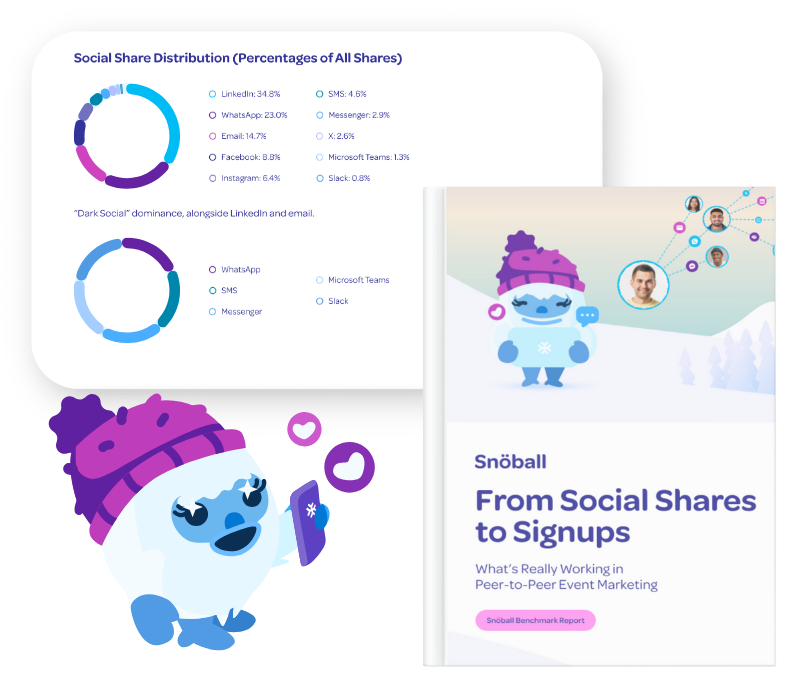
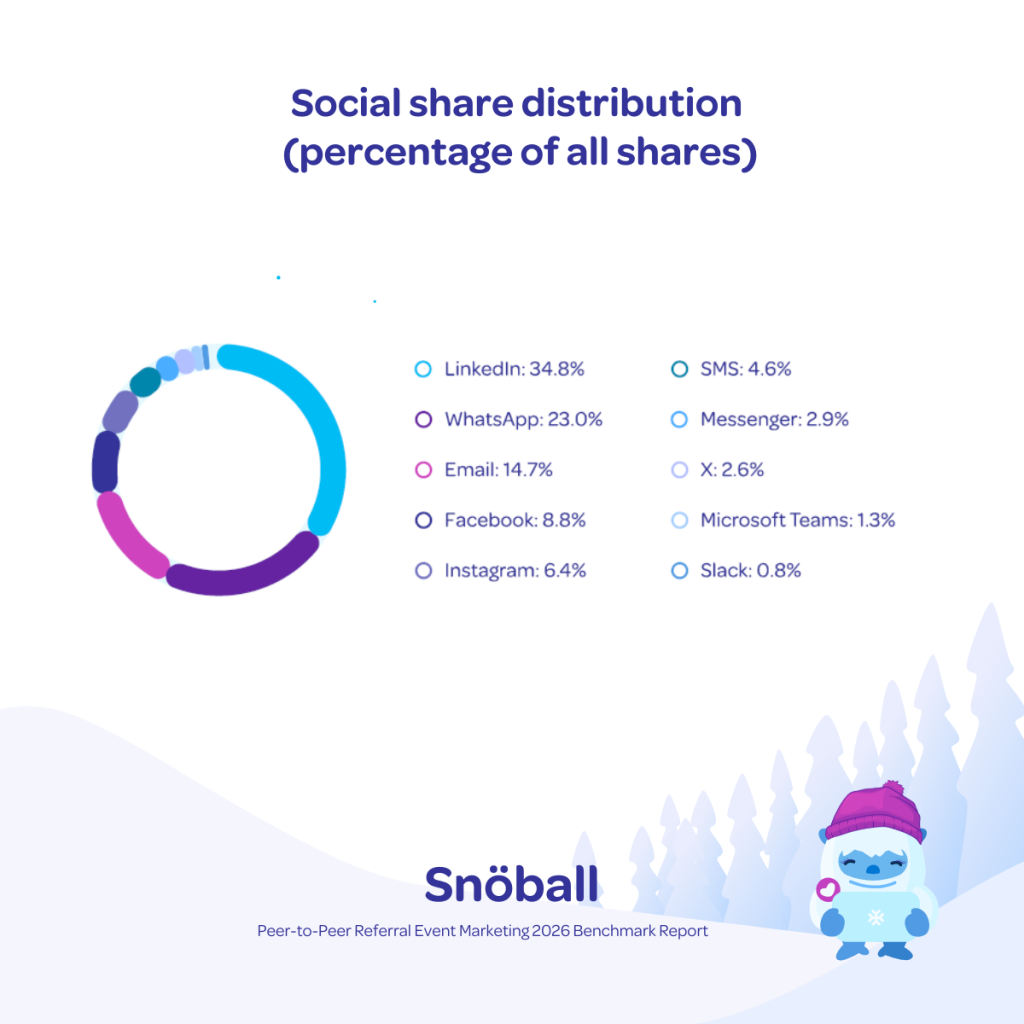
According to the 2026 Peer-to-Peer Event Marketing Benchmark report, email remains a core part of event marketers’ peer promotional strategies, accounting for nearly 15% of the total shares.
This guide lays out a practical system to develop high-performing event email campaigns. We will move beyond the boilerplate tips and offer a framework that lets you design emails based around real humans – before, during, and after your event. This will help keep the momentum going so that your event communication feels seamless, and extends the conversation with your audience from one campaign to the next.
Additional reading: 7 tips to drive more event sign-ups with emails
Here’s what we will cover:
- Before the event – warm up your audience before asking for commitment
- During the event – focus on mobile-first engagement with participants
- After the event – use the momentum to turn it into loyalty
- How peer-led email marketing changes everything
- Conclusion: build a loop, not a funnel
Before the event – warm up your audience before asking for commitment
Pre-event emails set the ceiling for registration performance. When early messages feel targeted and useful, later reminders help your audience warm up rather than feel forced.
The ‘spray and pray’ approach is the fastest route to the spam folder. When you send the same generic email to a CEO, a mid-level manager, and an intern, you are not really speaking to anyone. You need to make it more relevant to each person you send the campaign to.
Why most event marketing emails get ignored
Think about your own inbox. When you see an email from a brand you barely recognize with the subject line “Register Now for [Event Name],” do you click? Maybe yes. Likely not.
According to HubSpot’s State of Marketing Report, segmented email campaigns generate about 30% more opens and 50% more click-throughs compared with unsegmented blasts. When you treat your list as a single monolith, your emails will be ignored or archived. Email providers like Gmail, Outlook and Yahoo notice when your emails are consistently ignored or deleted without opening. Eventually, they stop delivering them to the primary inbox altogether.
How to segment your event audience
You need to map your audience into distinct segments e.g. attendee, speaker, exhibitor or sponsor. Divide it further by role, industry, or intent. Once segmented, you need to talk to each group like you’d talk to a real person.
- The teaser email – evoke curiosity: The goal of the first email is to sell the value of the event, not the ticket. For instance, for a segment of healthcare professionals, send a teaser about a specific workshop that solves a hard problem they face daily. For a segment of executives, tease the networking exclusivity.
- Bad copy: “Join us for 3 days of learning and networking. Register here..”
- Better copy: “We talked to 200 healthcare administrators about their biggest staffing headaches. This is how our upcoming session tackles nurse retention without burning your budget.”
Email Example: Value-Driven Approach
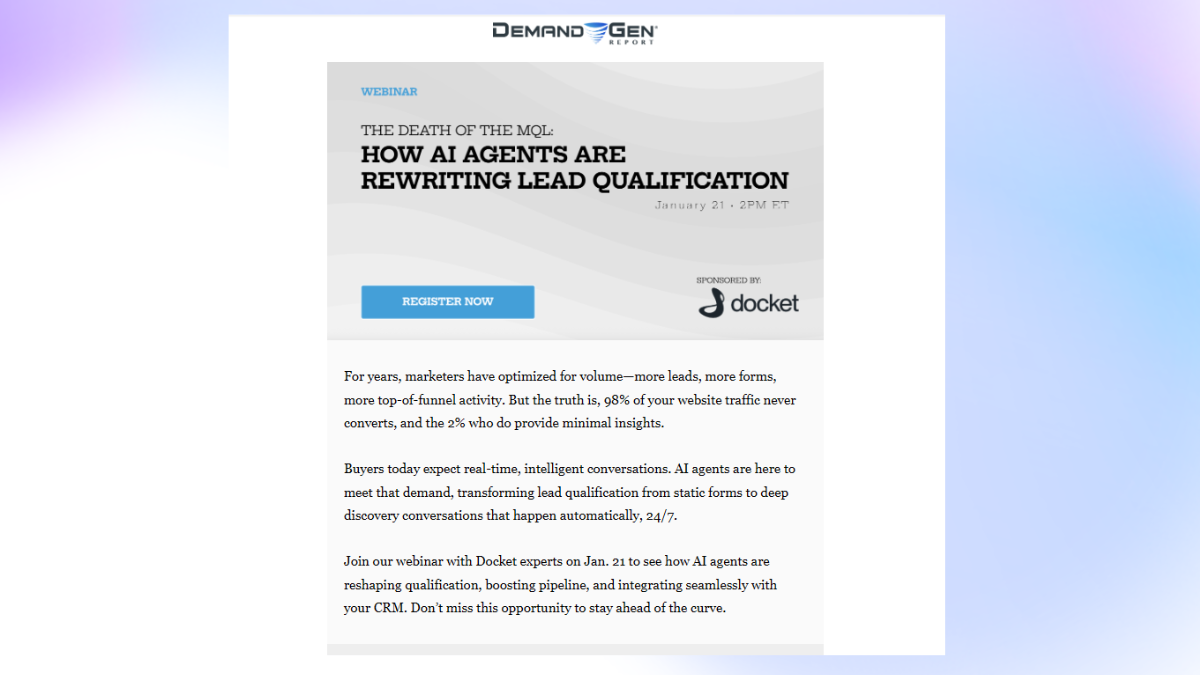
- The incentive email – focus on exclusivity: Discount codes are standard, but how you frame them matters. A generic “10% off” feels like a forced sale. Mentioning it as an ” exclusive insider benefit” feels like a reward.
Highlight networking opportunities or early-bird discounts, but frame them as access.
“We have reserved five spots at the VIP roundtable for early registrants” is more compelling than “Sign up early to save money.”
- The trust email – focus on peer validation: This is where you shift gears. Instead of the brand introducing the event, let the attendees, speakers, or exhibitors do it.
An email that comes from “The [Event Name] Team” can easily be ignored. An email that appears to come from a respected industry speaker or features them prominently in the header will make the reader stop and look.
Email Example: Peer-Led Messaging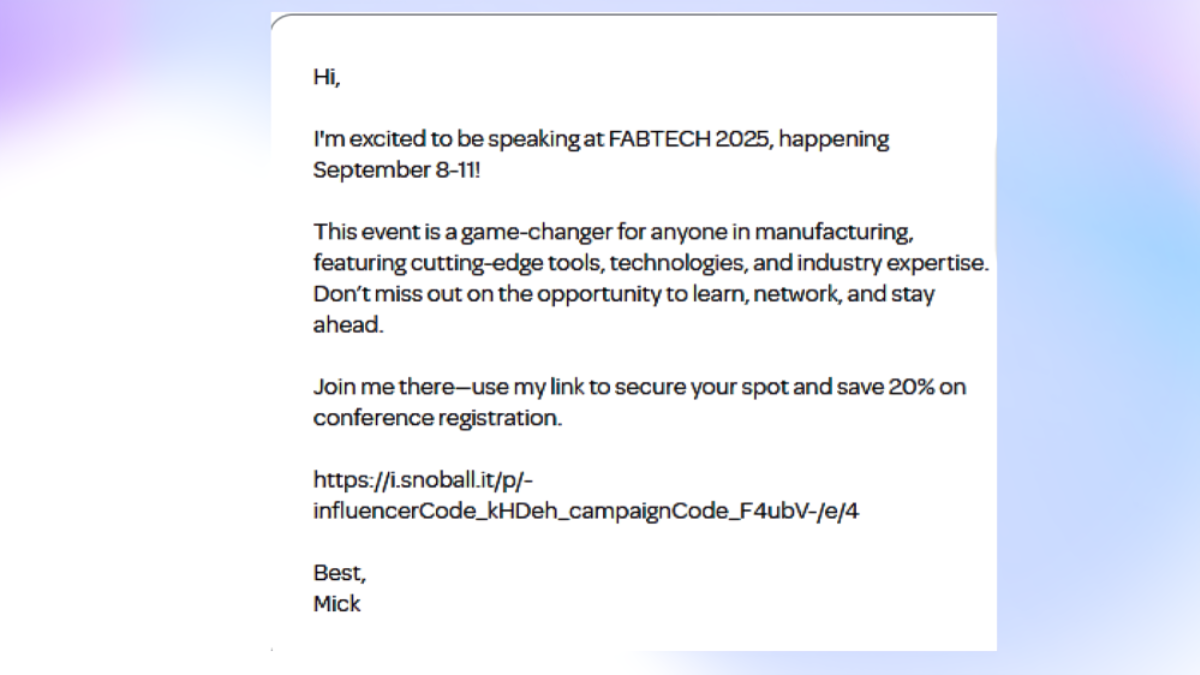
- The anti-marketing email – strip away the fluff:
Sometimes the highest-converting email is the one that doesn’t feel like marketing at all. Instead of hype and superlatives, focus on removing friction. Tell them exactly what the day looks like, who should attend, how to justify it internally, and what they’ll miss if they don’t go. Clarity beats creativity when someone is deciding whether to block their calendar and spend their budget.
As Nicola Wartnaby, Group Marketing Director at Terrapinn, explains:
How Snöball helps: Turn participants into promoters
Snöball allows you to empower your speakers, exhibitors, and attendees to become co-promoters through peer-to-peer marketing solutions. This bridges the gap between a cold list and a warm lead.
Imagine a speaker sending a personalized email to their own followers saying, “I am speaking at this event next week – here is what I am covering.” That email carries weight that your brand marketing channel can’t possibly replicate. Snöball helps scale and track this, so you can see exactly who is driving traffic. Outreach turns into peer-led promotion, generating organic interest before you spend a dollar on paid acquisition.
If your pre-event emails do their job, the heavy lifting is done. Map your list into 2–3 segments this week. Write one distinct email for each segment that focuses on what they get, not what you want them to do.
During the event – focus on mobile-first engagement with participants
Many marketers tend to go radio silent once the event starts – they stop emailing.
However, an email remains a potent tool even after the doors open.
The mobile reality
During a live show, your audience is most captive, but also most distracted. They are overwhelmed by sensory input – noise, lights, people, and sessions. Your email strategy needs to shift from “acquisition” to “concierge.”
Imagine your attendee walking down the hallway, holding a coffee in one hand and their phone in the other. They are scrolling quickly between sessions.
A well‑timed email can turn a wandering attendee into a session participant, a no‑show into a last‑minute registrant, and a passive visitor into a lead.
Make sure to focus on responsive design. If your email requires pinching and zooming to read, it will be skipped immediately. 55% of email opens occur on mobile devices, and that number is likely higher during live events.
What emails should you send during a live event?
Your onsite emails must be short, punchy, and useful. A wall of text will be ignored, while snappy graphics and a clear action button will encourage involvement.
- The recap email: If you are running a multi-day event, the evening of Day 1 is prime time. Send a highlight reel of photos of packed rooms, snippets of high-energy panels, and quotes from the day. You can also mention upcoming must-attend sessions, booths to visit or other experiences.
Why it works:
- Validation: Attendees are often exhausted by the end of the day. Seeing the energy reflected back to them confirms they made the right choice to travel and attend. It reinforces the “high” of the event.
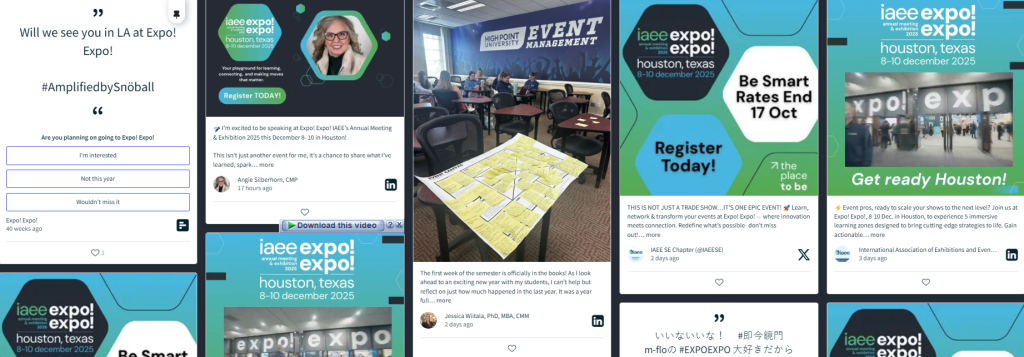
- Community building: Highlight social posts from other attendees and exhibitors through event tech solutions like a Social Wall (see image below). It encourages passive attendees to get active on the event app or social media the next day to be featured.
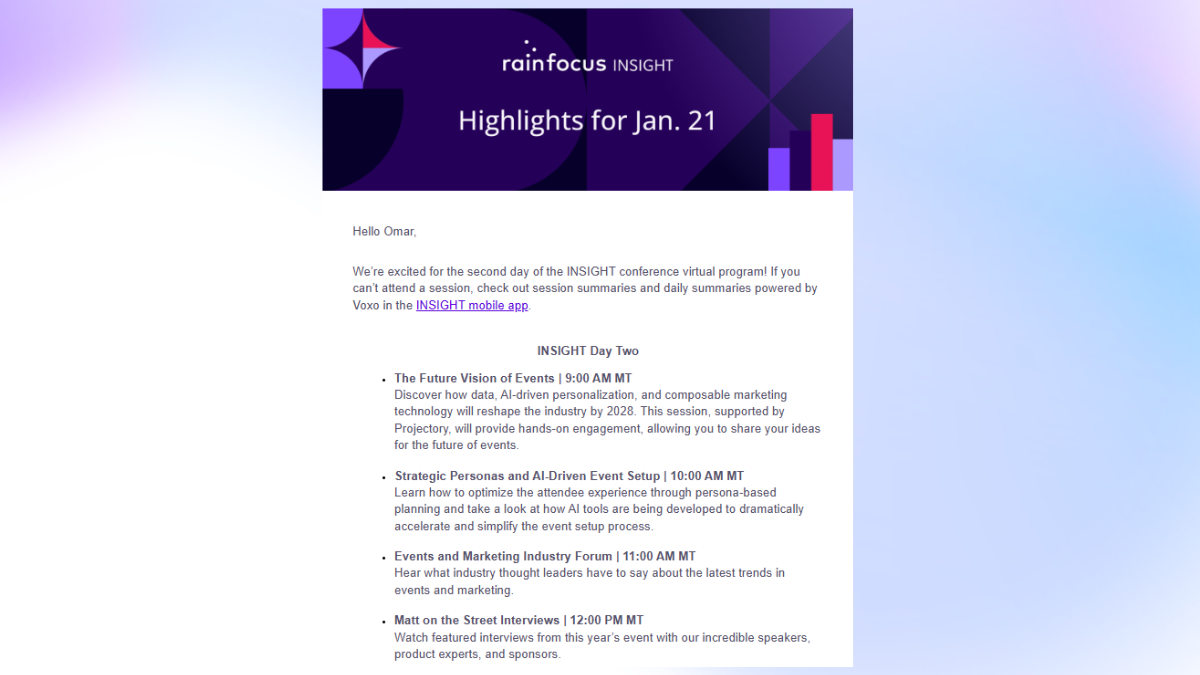
- The curator email: Attendees often feel paralyzed by choice. There are too many booths and too many sessions. Be their guide.
Send a morning email (around 7:00 AM) that cuts through the noise: “Here are the three sessions you cannot miss today” or “Visit these 5 booths if you are interested in AI solutions.” By curating the experience, you add value and direct foot traffic to exhibitors who might otherwise be struggling for attention.
Email Example: During-Event Curation
- The Networking nudge: At live events, the real business often happens after the sessions end. Yet, many attendees retreat to their hotel rooms because they don’t know where the crowd is going.
- Subject: “Where to find the crowd tonight.”
- Body: “The sessions are done, but the networking is just starting. Join us at [Location] for the happy hour, or check out the ‘Community’ tab in the app to see where fellow attendees are grabbing dinner.”
Why it works: It solves a specific anxiety for solo travelers: “What do I do tonight?” By guiding them to social spaces, you facilitate the peer-to-peer connections that make live events memorable.
How Snöball helps: Keep alive the pulse of the event
During the event, generic brand updates will feel like white noise. However, seeing real-time updates from speakers, exhibitors or attendees will make the event feel more alive.
Snöball helps amplify these authentic voices. If a speaker is sharing a photo from their session, that content is invaluable. Incorporating that user-generated content into your daily digests transforms your email from a corporate bulletin into a pulse check of the live action. It proves that the event is “happening” and that people are enjoying it.
Onsite emails are about logistics and hype. Send one mobile-first email per day with a single, clear action item. Avoid inbox clutter.
After the event – use the momentum to turn it into loyalty
The “Thank You” email is usually where the relationship goes to die.
Most event marketers are exhausted by the time an event wraps. They send a “Thanks for coming” blast, include a link to a survey soliciting feedback and then go silent for months until the next cycle begins.
This is a massive missed opportunity. The days immediately following the event can offer the highest engagement potential you might have all year. The memory is fresh. The dopamine is still hitting. It’s time to turn your audience into loyal promoters – and reach out to those who missed the show.
Three follow-up tracks based on attendee behavior
Do not send the same email to everyone. Your post-event strategy requires three specific tracks based on attendee behavior.
Track 1: The value track
For the people who actually showed up, the goal is to extend the lifecycle of the event. The “Thank You” should open the next door, not close the current one.
Email Example: Post-Event Value
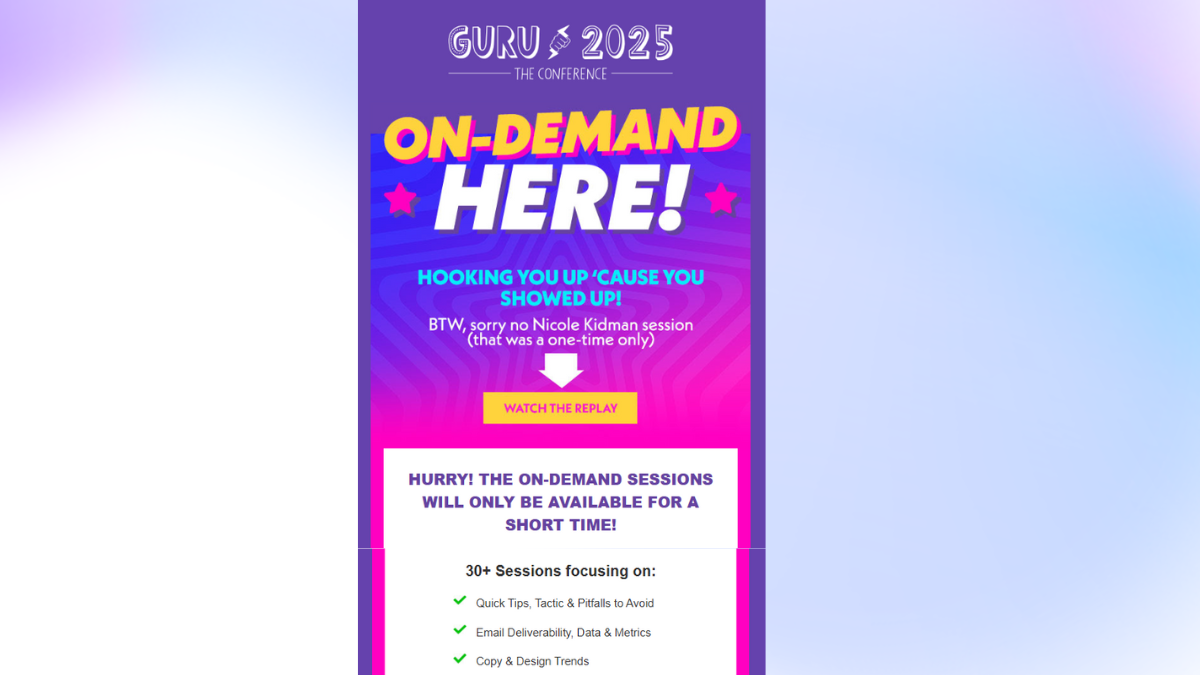
Provide value immediately. Do not ask for a favor yet. Send them:
- Speaker decks and presentation slides.
- Links to on-demand recordings of sessions they might have missed.
- Access to niche community groups or Slack channels where the conversation continues.
By giving them useful resources they can start using in their professional life, you convey the idea that your event values their participation.
Track 2: The recovery track
These are the no-shows. They registered but didn’t come.
Send them a “Best of” content wrap-up. “We missed you, but we didn’t want you to miss out on these insights.” Include the top three takeaways from the keynote.
This keeps them warm. It signals that you value them even if they didn’t swipe their badge. This creates a psychological debt of gratitude that makes them more likely to attend – or at least engage – next time.
Track 3: The sales track
Use your engagement data to identify the power users – the people who attended numerous sessions, downloaded the app, and visited booths.
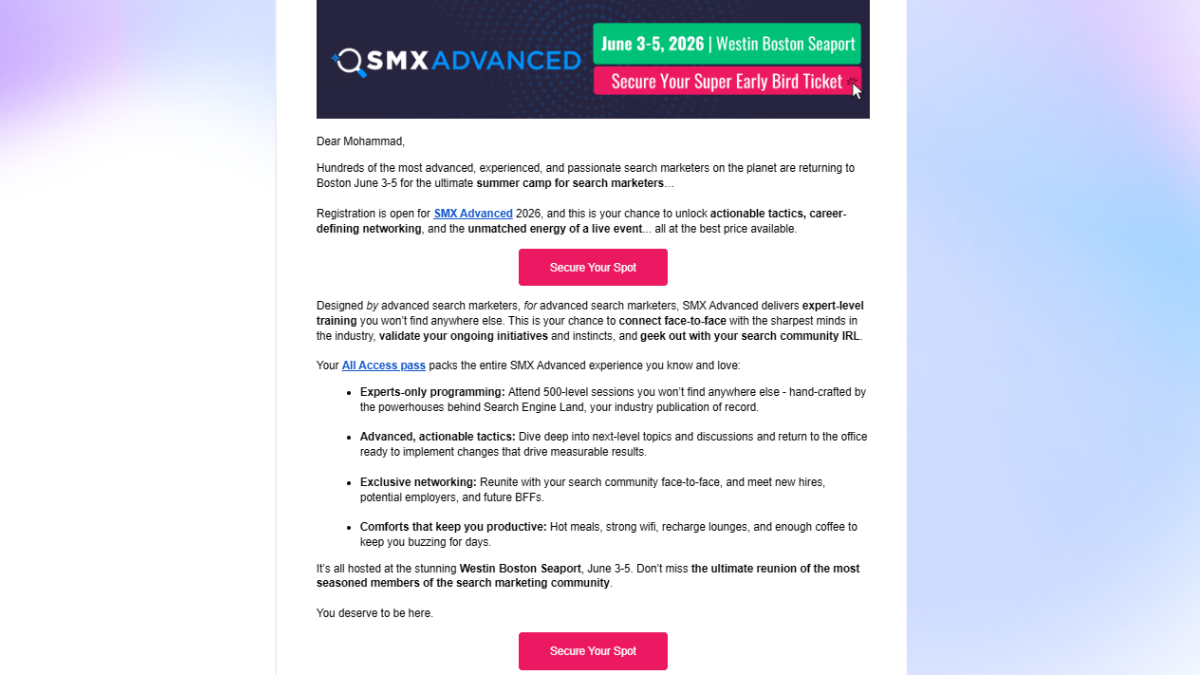
These are your prime candidates for next year. Offer them an exclusive ‘Super Early Bird’ rate for the next edition while the excitement is still fresh.
Email Example: Early Bird Conversion
How Snöball helps: Identifying the top promoters and sharing channels
Data is your best friend here. Snöball campaign data reveals who drove clicks, who referred peers, and which social channels performed best.
This allows you to identify your “Super Advocates” – the people who didn’t just attend, but brought others with them. These are the people you nurture for next year’s campaign immediately.
You can segment your follow-up to acknowledge their contribution: “Thanks for bringing your team.” This level of acknowledgment builds profound loyalty.
Post-event emails decide retention. Create three follow-up versions (Attendee, No-Show, High-Intent) and ensure every email gives them something valuable (content/access) before asking for something new.
How peer-led email marketing changes everything
Throughout the lifecycle – before, during, and after – the underlying success factor is the human touch. Brand messages blend in; peer messages stand out.
To understand why this shift is necessary, we have to look at the psychology of the recipient.
The trust deficit
We live in a low-trust economy.
Findings from the 2025 Edelman Trust Barometer show that 60% of consumers trust what creators or independent voices say about a brand more than what the brand says about itself.
In other words, credibility increasingly travels through people, not institutions. For event marketers, this has a direct implication.
A speaker, exhibitor, or attendee sharing an event with their own network carries more weight than another broadcast email from the event brand. Peer-aligned voices cut through inbox fatigue because they arrive with built-in relevance and trust.
We are wired to be skeptical of a company saying “We are great.” We are wired to be receptive to a friend saying “This company is great.”
When you send an email from a brand account, the recipient’s brain categorizes it as “Marketing.” It goes into a mental bucket that is easily discarded. When an email appears to come from a peer, a speaker, or a colleague, the brain categorizes it as “Social Information.” It bypasses the initial filter.
The metrics of human connection
This isn’t just a feeling – the numbers back it up.
- First-person phrasing works: Changing a CTA from “Save your spot” to “Save my spot” can lift click-through rates by over 28%. The possessive pronoun makes the recipient feel ownership.
Also read: 7 psychological hacks to create compelling CTAs
- Visuals matter: A 2023 survey found that 43% of marketers reported improved performance when using GIFs to show, rather than tell. A GIF of a crowded expo floor communicates “excitement” faster than a paragraph of adjectives.
- Social proof wins: Emails featuring testimonials or social proof can boost clicks by up to 25%.
These tactics work because they leverage social validation.
Bottom line: build a loop, not a funnel
The difference between a panic-induced email blast and a successful campaign is not the size of the budget. It is the intent of the strategy.
Old-school event marketing treats the email list as a resource to be mined until it is empty. The modern approach treats the list as a community to be nurtured.
By segmenting your audience before the show, optimizing for mobile utility during the show, and personalizing your follow-ups after the show, you stop fighting for attention and start earning it. You move from a “funnel” mentality – where people fall out the bottom and are lost – to a “loop” mentality, where every event feeds the excitement for the next one.
When you layer peer-to-peer advocacy on top of that framework, you do not just get an attendee; you get an advocate. You get someone who buys a ticket, brings a friend, and replies to your email saying, “I can’t wait.”
Next Step: If your next campaign doesn’t include at least one peer-led message, you’re leaving trust, and registrations, on the table. So activate your event community with the tools to share your event via email and watch your event grow organically.
TL;DR: Your Event Email Marketing Blueprint
Event emails still deliver $36 for every $1 spent, but only when you build trust through people, not just brand messaging. Here’s your complete framework:
Before the Event
Segment your audience into 2-3 distinct groups and create tailored messaging for each.
Key emails: Teaser (evoke curiosity) → Incentive (frame exclusivity) → Trust (peer validation)
During the Event
Shift from “acquisition” to “concierge” mode with mobile-first, action-focused emails.
Key emails: Daily recaps → Session curation → Networking nudges
After the Event
Create three distinct follow-up tracks based on attendee behavior.
Track 1: Attendees (provide value: recordings, slides, community access)
Track 2: No-shows (share “best of” highlights)
Track 3: Power users (exclusive early-bird offers)