
Most sponsorship conversations start in the wrong place.
The organizer arrives with a prospectus. The sponsor flips to the page with booth sizes and logo placements. A number gets agreed on. A contract gets signed. Then, about 60 days after the event, someone on the sales team picks up the phone to ask if they are coming back.
Sometimes they are. Often, they are still deciding.
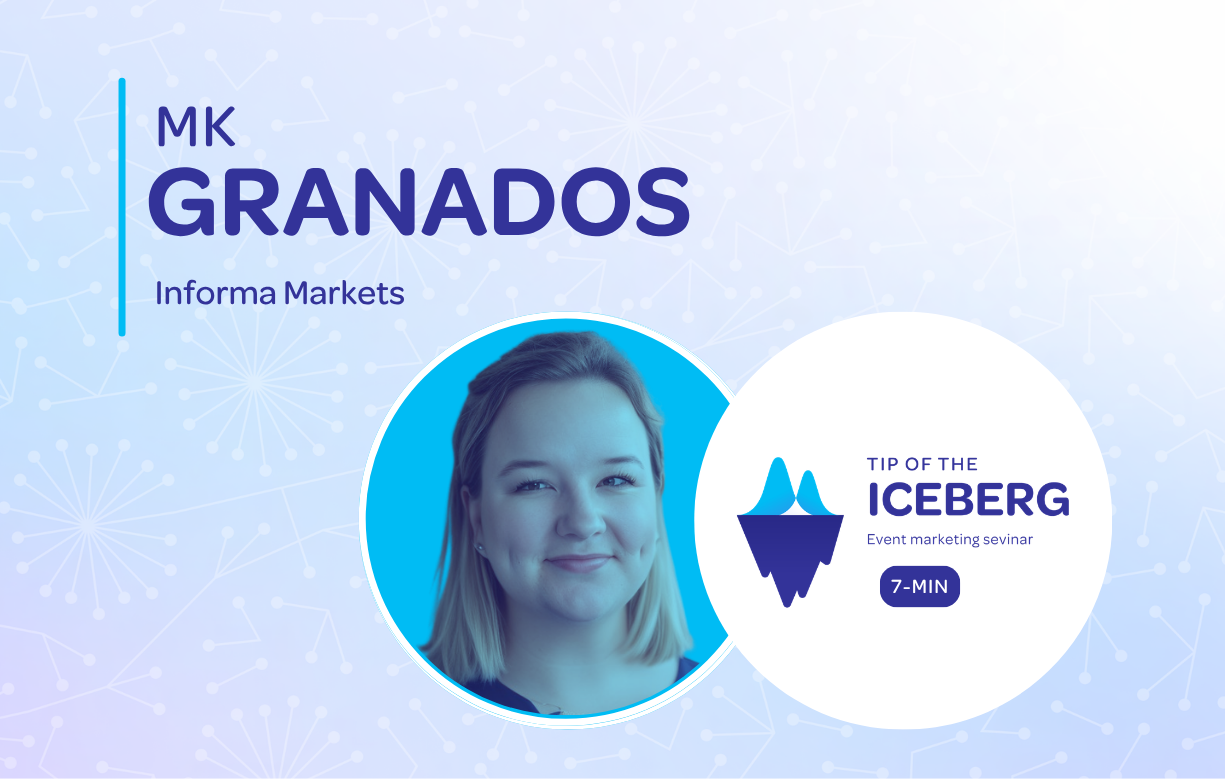
MK Granados has spent years thinking about why that happens and what to do about it. As Director of Revenue Optimization, North America at Informa Markets, she works across one of the largest event portfolios in the world. Her job is to help teams design sponsorships that are easier to sell, easier to understand, and more effective at building lasting relationships with audiences.
Instead of asking “What sponsorship inventory do we have?”, she believes event teams should start with a different question: “What does our audience need right now?”
That shift changes what gets built, who buys it, and whether they come back.
In our latest Sevinar, MK joins Rachel Stephan, CEO and Founder of Snöball, to walk through how Informa approaches sponsorship design, sales, and retention. Here is what she shared.
1. Match sponsors to attendee milestones, not just demographics
“It’s impossible to not see the impact of AI and digital disruption and the future of work impacting our attendees no matter what industry we serve. […] We have attendees who aren’t even sure if they belong at our events anymore, those who are job searching, those who are maybe considering leaving this industry.”
Why this matters
Most sponsorship targeting starts with job title, company size, or industry vertical. MK starts somewhere different. She looks at where attendees are in their professional journey right now.
An attendee considering a career pivot has different needs from one who just got promoted. Both differ from someone looking to exit a small business they have built over 20 years. These are distinct moments in a person’s life, and each one is valuable to a specific category of sponsor: recruiters, talent development firms, law firms handling business transfers, consulting partners, learning and education providers.
MK is also deliberate about language. Describing these attendees as “people who need services” rather than by a demographic label reframes the same audience as a business opportunity rather than a welfare case. That framing matters when a sponsorship pitch has to travel up an internal decision-making chain to someone who has never attended the event.
AI plays a supporting role here too. MK describes uploading exhibitor lists and prompting for strategic alignment to surface which sponsors are most likely to benefit from a specific audience moment. That kind of targeted research can happen even six months out from the event, giving sales teams a more personalized pitch before the first meeting.
Takeaway
Look at your registration data and post-event surveys with a fresh question in mind. Ask what is happening in your attendees’ professional lives right now. That is where sponsorship opportunities often sit, waiting to be matched with the right partner.
2. Design every sponsorship to work for all three parties
“My favorite sponsorships are the ones where it’s win-win-win. Our attendees win, our exhibitors and sponsors win, and us as show management wins. And there’s usually a way to architect a sponsorship product that can achieve all those goals.”
Why this matters
Many event sponsorships are built around one party’s priorities. The sponsor wants leads. The show wants revenue. The attendee is expected to benefit by proximity.
That model tends to produce one-time sponsors.
MK treats all three parties as equal design requirements. When the attendee gains something meaningful, the sponsor’s activation performs better. When the sponsor sees a clear path to ROI, renewal becomes a natural next step. When show management can defend the product internally, it gets the resources and attention it needs.
This win-win-win outcome approach becomes a key requirement for a sponsorship that renews without a hard sell.
Takeaway
Before finalizing any sponsorship package, run it through all three lenses. What does the attendee gain? What does the sponsor gain? What does show management gain? A weak answer on any one of those means the product needs more work before it goes to market.
3. Sell the audience segment, not the audience size
“There’s people who need services, and there’s unique service providers in the ecosystem of your event — those who are in recruiting, headhunting, talent development, learning and education. To any of those groups, that is a really specific, valuable segment.”
Why this matters
Reach and footfall numbers are table stakes. Most competitors can offer them in some form. What many sponsors actually need is precision: the right 200 people, rather than the right 20,000.
MK gives a concrete example from the conversation. One of Informa’s events has a large concentration of small business owners looking to exit or hand down their companies.
That is a small slice of the total audience. But to a law firm that handles business transfers, or a consulting partner that facilitates those relationships, it is an unusually high-value group.
A boutique activation built for that specific audience can outperform a large-scale general presence, and it tends to be more memorable for the attendees who experience it.
Going to market strategically with a defined segment, rather than placing a sponsorship in the prospectus and hoping it sells, is what MK identifies as the difference between a sponsorship that converts and one that sits.
Takeaway
Review how your sponsorship materials describe your audience. Are you leading with scale or with specificity? The sponsors most likely to renew are often the ones who found exactly the audience they were looking for, not the biggest one available.
4. Stop selling booths. Start selling journeys.
“Hey. I sent you my logo. Just execute my sponsorship for me isn’t gonna yield results. But saying, we do have research, let’s make a white paper specifically for this, and we’ll submit that ahead of time. Or we will hold a post-event webinar, recapping some of the highlights of this and then augmenting it once we have a chance to see where our audience is.”
Why this matters
There is a version of event sponsorship that is essentially a real estate transaction. The sponsor rents a space for three days. They collect badge scans. They leave. As Snöball’s guide to event sponsorship strategy notes, sponsors often treat the event as an afterthought. They write the check and assume that is their best form of promotion.
That model creates transactional sponsors.
MK’s alternative is to treat the sponsorship as a journey with a planned shape: pre-event content, curated introductions, post-event webinars, white papers co-created with the sponsor’s team. Each element gives the sponsor another reason to stay engaged and another proof point to bring into a renewal conversation.
This is also where peer-to-peer engagement becomes relevant. When sponsors are part of a community activation rather than a static booth presence, they gain visibility across attendee networks. Snöball’s exhibitor marketing solution is built around this idea: giving exhibitors and sponsors co-branded assets they can share with their own networks, so their participation becomes active promotion rather than passive presence.
Takeaway
Map out what a sponsor’s full experience looks like from several months before the event to several months after. If the plan ends on the final day of the show, the conditions for renewal are harder to create.
5. Plan the post-event handoff before the event starts
“The reason a sponsor is going to support this program through the event is that the event owns the data to begin with. We own our audience. We own the channels in which you’ll communicate through this audience. […] We need to give them the platform to then own that list and continue to nurture that community that they’ve formed.”
Why this matters
Most post-event planning happens after the event. By that point, the window for a warm handoff is already closing.
The sponsor’s ability to continue nurturing the relationships formed at the event depends on a handoff that has to be designed well in advance. What data will the sponsor receive? Through which channels? What does ongoing community engagement look like? Who owns what after the show floor closes?
MK is direct about what happens when that planning gets left too late. If the first thing attendees do after an event is unsubscribe from sponsor communications, the value of the activation depreciates fast. The relationships formed at the event dissolve before the sponsor has a chance to build on them.
The events that earn renewals are the ones where sponsors leave feeling they built something that continues. For a closer look at how attendee engagement drives retention on both sides, the Snöball case studies show what post-event community activation looks like across different event types and industries.
Takeaway
Add a post-event engagement plan to the sponsorship proposal before the contract is signed. Make it part of what the sponsor is buying from day one, not something figured out in the weeks after the event ends.
6. Make someone responsible for community, or everything else stays theoretical
“In my dream state, a community manager role exists within events. Maybe that’s brand and community, or community and education, or community and social media. […] Figuring out who fosters the relationships of the people — and maybe one of the key metrics of that role is loyalty, retention of attendees, retention of exhibitors — that person is so, so valuable.”
Why this matters
Every idea in this article depends on someone owning the relationship layer.
Attendee milestones, sponsor journeys, post-event nurturing, community continuity: these only happen reliably when one person is responsible for making them happen. In many event organizations, these responsibilities sit across sales, marketing, and operations, with no single owner. As a result, relationship-building becomes everyone’s background task and nobody’s primary focus.
MK’s argument is that retention is a relationship metric before it becomes a revenue metric. The sponsor who hears from someone beyond the sales team during the year, who sees their investment recognized and built upon, who feels a personal connection with the show — that is the sponsor who signs the renewal with less friction.
The title of the role matters less than the mandate. Brand and community, community and education, community and social media: any of those structures can work. What matters is that someone is accountable for loyalty, measured by it, and resourced to act on it.
Snöball’s 7 Pillars of Attendee Retention and Event Growth explores how peer-to-peer amplification supports this: when the people who already love your event invite others like them, the community becomes self-reinforcing. Sponsors embedded in that community benefit from the same momentum.
Takeaway
Look at your team structure and ask honestly: who owns the ongoing relationship with sponsors between events? If the answer is unclear, that ambiguity makes renewal harder for everyone.
Bottomline
Throughout the conversation, MK keeps returning to the same starting point: identify the need first.
The sponsorships that sponsors renew year after year rarely succeed because of a larger booth, a premium logo placement, or a longer list of package benefits. They succeed because they created real value for a specific audience at the right moment, and because someone planned what happened next.
Start by understanding the challenges, goals, and transitions shaping your audience. Build sponsorship products around those moments. Frame segments with precision rather than scale. Design the post-event journey before the event begins. And make sure someone owns the relationships that keep the community together after the show floor closes.
When event teams approach sponsorships this way, renewal becomes a natural outcome rather than a sales conversation.
To explore how event teams use peer-to-peer engagement to build stronger sponsor and attendee relationships, browse the Snöball Sevinars series or read our case studies from events across industries.
Listen to this Sevinar on Spotify
About MK Granados
MK Granados is Director of Revenue Optimization, North America at Informa Markets, one of the world’s largest events businesses. She works as an internal consultant within the Sales Excellence function, helping event teams design sponsorships and experiences that are easier to sell, easier to understand, and more effective at building trust with audiences. Her background spans consumer events including New York Comic Con, Star Wars Celebration, and PAX, as well as B2B conferences at Gartner. That cross-sector experience gives her a practical lens on how brand objectives, audience behavior, and event environment intersect, and where event strategies often fall short. She shares frameworks and real-world examples through industry speaking engagements, LinkedIn, and her newsletter on building event-led growth.
Discover how Snöball helps event teams activate their speakers, exhibitors, and advocates to drive registrations from the audiences that matter most.