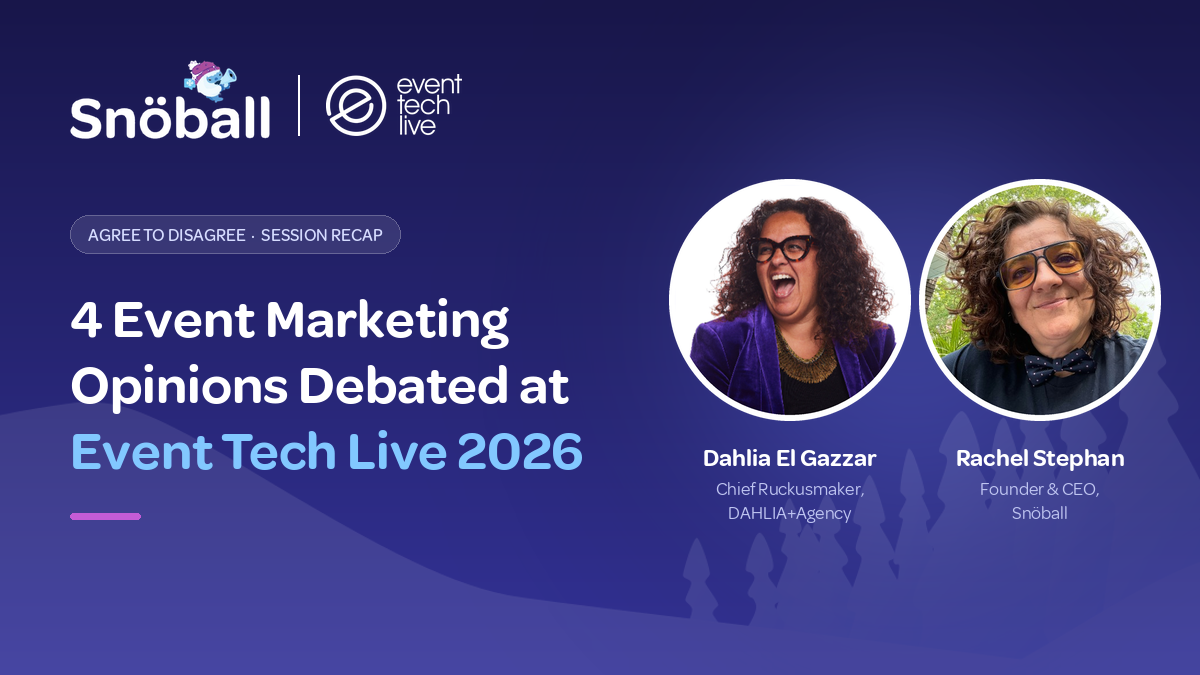
Do people matter more than programming in events? How strong is the influence of AI in event promotion? At Event Tech Live 2026, four common event marketing beliefs were put to the test, and the audience had plenty to say.
In their session, Event Marketing: Agree to Disagree, The Opinions Event Marketers Are Afraid to Say Out Loud, Dahlia El Gazzar of The Dahlia+ Agency and Rachel Stephan, Founder and CEO of Snöball, laid out four bold statements. The audience voted with green (agree) or red (disagree) paddles, and then both sides made their case.
There was friendly competition and a little sticker bribery. But beneath the humor was a serious conversation about which event marketing assumptions still hold up.
Watch the full session below and scroll down for the key takeaways.
1. “Who you’ll meet sells more tickets than what you’ll learn”
People or programming: what really convinces someone to attend?
Rachel: Agree. “I don’t make plans with agendas. I make plans with people.” Rachel commits to an event when she knows her people will be there, and spends most of it in hallway conversations. You can find content elsewhere, but not a conversation with someone you’ve wanted to meet for months.
Rachel said that Snöball’s own data shows 31.9% of people referred to an event by someone they know go on to register and attend.
Dahlia: Disagree. Well-designed programming is what creates those meetings in the first place. When content is built for every stakeholder, including speakers, sponsors and first-time booth staff, and uses formats like brain dates and hands-on workshops, it brings the right people together.
Rachel’s comeback: people deliver the content. Most of the room sided with her.
The takeaway: Content and connections don’t compete. Promote the people attendees will meet, not just the agenda, and design the program so those meetings actually happen.
2. “Email is still your best event marketing channel”
Is email losing its place, or are event marketers just doing it wrong?
This one split the room almost evenly. One attendee said LinkedIn and WhatsApp work best for her events, while marketing emails get lost in inboxes crowded with AI-generated sequences. Another said email drives registrations, but registered attendees prefer WhatsApp and similar channels.
Rachel: Email reaches the people you already have. New attendees come from peers talking in WhatsApp groups and private channels, asking each other, “Is it a good show? Who goes there?” Email often ends up as the last step, where people go to find the register button. She also urged exhibitors to skip the “come see us at our stand” message and explain what problem they solve.
Dahlia: The problem isn’t email. It’s boring email. Pre-show inboxes fill up with identical banners and “come see me” messages. Treat email more like a personalized shopping experience: speak to first-timers, share useful tips and show some personality. She even mentions what she’s binge-watching in her campaigns, and it gets replies.
Rachel added that returning attendees shouldn’t start from scratch. If you know which sessions they attended and who they met last year, pick up from there.
The takeaway: Email isn’t dead, but generic email is. Use it where it fits in the attendee journey, and give people a reason to open it.
3. “Getting recommended by AI matters more than posting every day on LinkedIn”
Will AI become the next big event discovery channel?
An attendee: Agree. People already ask AI which events to attend, and will use it to check whether a program covers what they need. Meanwhile, LinkedIn is getting noisier.
Dahlia: Agree. According to Dahlia, Freeman’s latest trend report found that 21% of attendees have used AI to discover events, and she said LinkedIn impressions are down 60%. Her main point: AI pulls together what people say about your event on LinkedIn, Reddit and your website. So search for your event in ChatGPT and check whether the answer is accurate and up to date.
Rachel: Disagree. AI is research. LinkedIn is validation from people you know. You might find a restaurant through a search, but you read the reviews before you book.
Another attendee: Disagree, for now. At their last event, a few registrations came from ChatGPT for the first time, but attendees posting on LinkedIn that they were going drove far more. They also worried that paid placements in AI answers could hurt trust.
The hosts landed on both, in moderation.
The takeaway: Start paying attention to how AI describes your event, but don’t neglect the people who vouch for it. AI can help people find you. Recommendations help convince them.
4. “If registrations come in late, people must be deciding late”
Are your attendees really making last-minute decisions?
The only unanimous vote of the session: everyone disagreed.
Rachel: She decided to exhibit at Event Tech Live in the spring, but only registered when she booked her flight. The data makes it look last-minute. The decision wasn’t.
Dahlia: “There is no late registration anymore.” People decide once they have the information they need, and many event websites don’t publish the full program until two to four weeks out. Keep your website growing as the event takes shape, and build separate journeys for first-timers, returning attendees, speakers and exhibitors.
Rachel’s idea: UNBOUND in Boston paired first-time speakers with experienced ones to help them prepare. Rachel suggested doing the same for attendees, so first-timers can learn from veterans what to expect before they arrive.
The takeaway: A registration date doesn’t tell you when someone decided. Share program details earlier, keep your website useful throughout and build journeys around different attendee needs.
One common thread: people still matter
The four statements sparked very different debates, but the same theme kept coming up. People influence whether someone attends. They recommend, validate, share experiences and create the connections that make events worth going to.
Channels will keep changing. AI will shape how people discover events, email will have to work harder for attention, and LinkedIn and private messaging will keep playing different roles. None of that changes the value of giving people something worth talking about, and a reason to bring others along.
Agree or disagree?