How to Promote Your Event with Advocate Video
How to turn your speakers, exhibitors and attendees into your best pre-event channel. They're already making content about your event. Here's how to point it where it pays off: the weeks before your doors open.
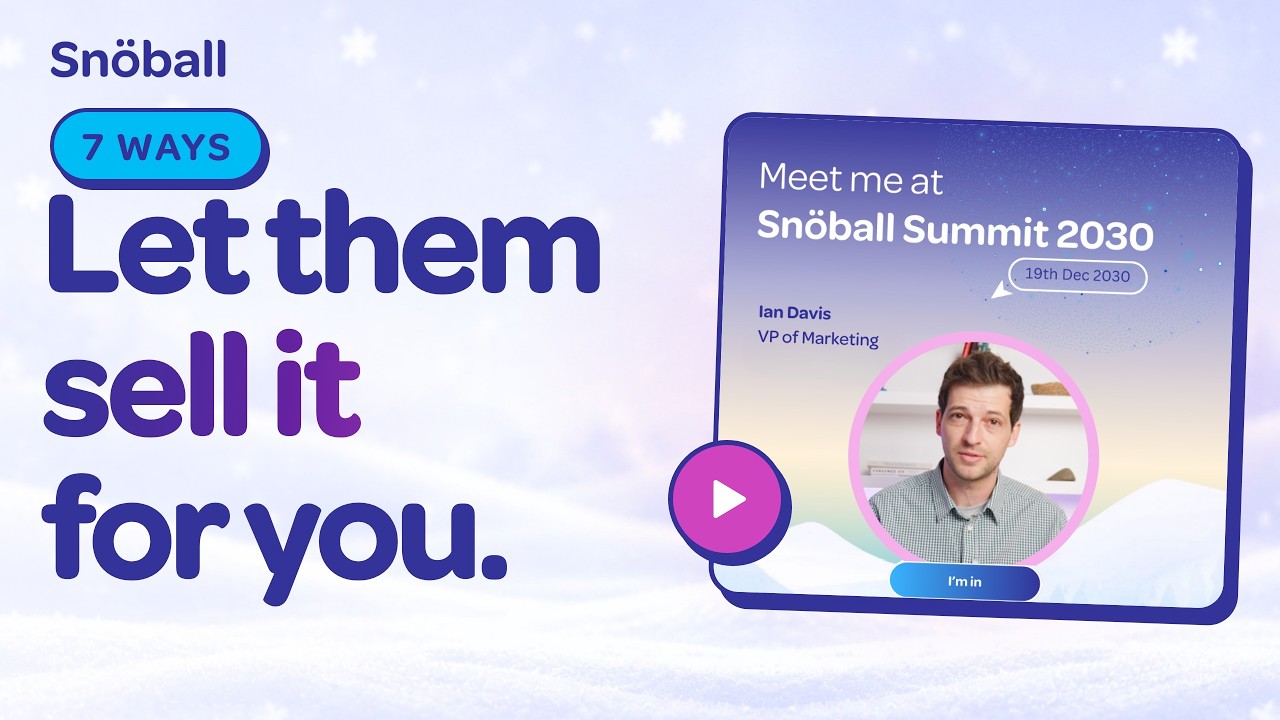
7 ways to turn your advocates into your best event promotion.
The short answer
Advocate video is short, personal video from the people with a real stake in your event (speakers, sponsors, exhibitors and attendees) inviting their own networks to join them. It's user-generated content (UGC) pointed at one goal: registrations. It costs less than production, people trust it more than brand ads, and when it runs pre-event, it's one of the most effective ways to promote an event you have. The catch is doing it at scale. That's a systems problem, not a content problem.
The short version
Seven tips to hand your advocates before they hit record. The full field guide by role is further down.
- Post that you're going, before you goThe pre-event “I'll be there, join me” is what fills this year's seats. Save the recap for building next year.
- Make it an invitation, not an announcementTalk to your network: who you want in the room, and why they should be there too.
- Say the event name and date in the first five secondsCaptions get cut and people scroll. Make the what and when unmissable while there's still time to register.
- Give one specific reason to attendA session you're in, a person to meet, one thing they'll walk away with. Not “excited to be here.”
- Put the registration link in the captionAnd name the next step. The video earns the click. The caption turns it into a sign-up.
- Post from your own account and tag othersTag co-speakers and the event so it reaches their networks while seats are still open.
- Keep it short and personalA 15 to 30 second clip, face to camera, that plays right inside the share card beats a polished trailer nobody finishes.
The honest case for UGC
Let's be plain about why this works, because it isn't magic. People trust people more than brands. They always have. The difference now is that the gap is measured, and it isn't close.
Here's the part that matters for events. Your advocates aren't celebrities, and that's the advantage. The most engaged creators online aren't the ones with the biggest followings. They're the ones with the smallest, closest circles. A speaker posting to 4,000 peers who know her work beats a polished brand post to a bigger, colder audience.
Every speaker, exhibitor and engaged attendee at your event is a nano-influencer to their own network. You don't have to go find creators or pay for reach. The credible micro-audiences already registered. UGC is just the practice of activating them, and video is the format that carries the most of what makes them persuasive.
Why pre-event is where it pays
Most event video shows up as a recap: the highlight reel after the doors close. Recaps are great for keeping the momentum going into next year. But if the goal is growing this year's event, the window that moves registrations is the one before the event, when there are still seats to fill and your advocates have the clearest reason to post: they want the people they respect in the room with them.
A pre-event advocate clip does a job a brand promo can't. “Join me” from a speaker your prospect already follows lands as an invitation, not an ad. It shows up in a trusted feed at the exact moment the decision to register is live. That's why, to grow this year's event, we point advocacy effort at the weeks before it. The recap can carry the story forward after.

Front-load your advocates. The best time for a “join me” is while there's still a seat to take.
Why video is the UGC that works
A name badge says someone is attending. A ten-second clip shows how they feel about it, and feeling is what travels. A face, a voice and a little movement carry an immediacy a static graphic can't. Events are built for it: a speaker previewing her talk, an exhibitor walking his booth, an attendee who can't hide being excited.
It gets better when the video lives inside the share instead of next to it. In the usual model, an advocate posts a graphic that points at a separate page. A video share card closes that gap: the share becomes the place the video plays, so a scroller sees a real face before deciding whether to click. Snöball's Sno-Motion brings branded motion to the card, and Reel Snö goes one step further: the advocate's own recorded video plays right inside it.
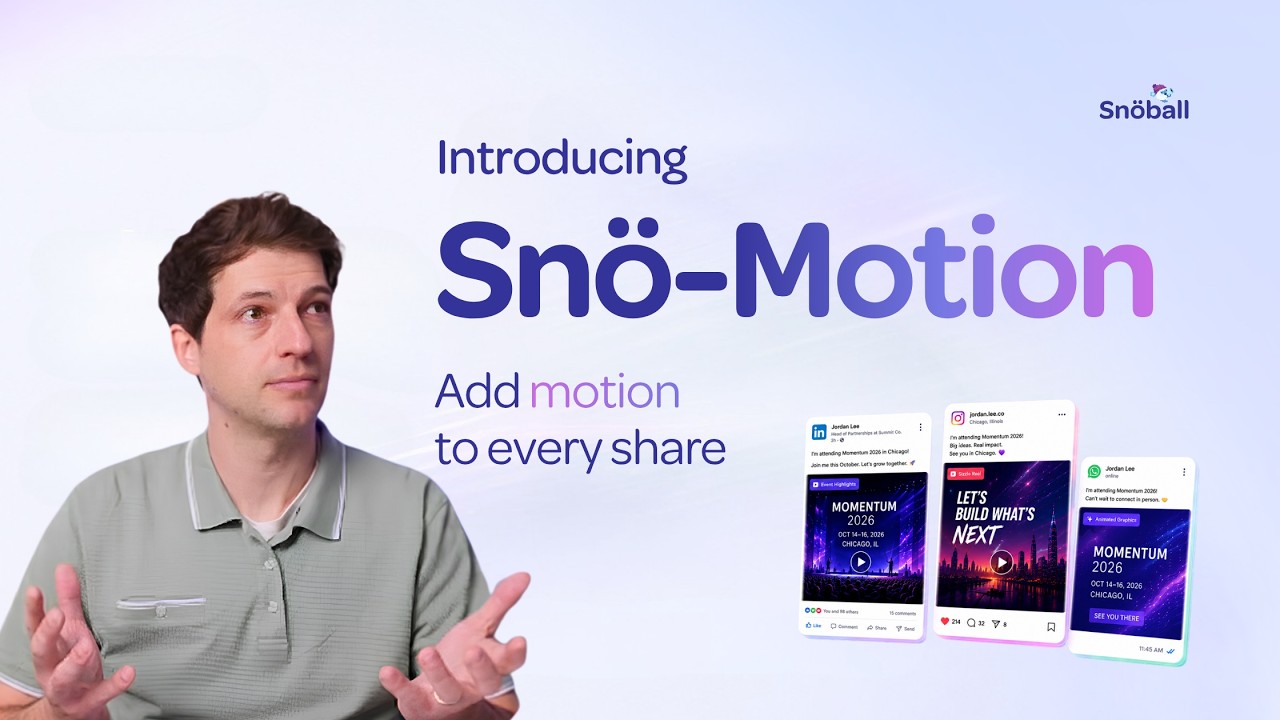
Sno-Motion: branded motion, built right into the share card.
The trust math
Three things combine when someone shares a video tied to their real involvement in an event. Each has value alone. Together, they compound.
The video earns the pause. The person sharing it earns the attention, because the trust exists before the message arrives. And their network carries it somewhere a brand post can't follow. Reach still matters, but peer-driven video adds a better question: not just how many people saw it, but how it reached them. A colleague's invitation lands with a weight another ad never will.
That reach only works if the share goes where their people already are. A speaker's network might live on LinkedIn. An attendee's might be a WhatsApp group. Forcing everyone onto one channel leaves most of that reach on the table.

Edelman's 2026 research on brand trust put it plainly: “what others who are not paid by the brand say about it matters far more than what the brand says about itself.” Their advice to brands: lead with earned, scale with paid.Edelman, 2026 Trust Barometer Special Report: Brand Growth in an Insular World
Make UGC people actually want to make
Asking people to promote your event is easy. Giving them something worth posting takes a little thought. The programs that work start from a plain truth: different participants want different things, and the content should leave room for all of it.
Start with their motive, not yours. Every share answers a silent question: why would I post this? “It helps the organizer” doesn't cut it. Let a speaker celebrate her session, help an exhibitor pull the right people to his booth, give an attendee a way to flag a professional interest. When the advocate wins, so do you.
Personalize past the name field. A name on a template is thin. Video takes it further: a voice, a face and a reason become the content itself, not a label on a stock graphic.

Lower the barrier. Enthusiasm and editing skills are different things. Give people clear prompts, a strong starting point and a share tool that takes a minute. You're closing the gap between wanting to post and knowing how, not turning every speaker into a creator.
Match the format to the moment. A polished trailer builds anticipation. A quick, unscripted invite builds intimacy. A demo answers a real question. Leave room for all three, and know which one the moment calls for.
The catch: UGC doesn't scale by asking
This is where a good idea meets an operational wall. Coordinating five advocates is a nice afternoon. Coordinating five hundred, each needing a different asset, a different message and a different reason to care, is a job no one has time for. Who gets which template? How does an exhibitor promote a booth while a speaker promotes a session in the same system? How do you keep every clip personal without personally making every clip? And once it's running, how do you tell what worked?
The good news is boring: this is a systems problem, not a talent problem. The stories already exist in the room. What's missing is the infrastructure to route the right prompt and the right branded template to the right person, make sharing effortless, and tie it all back to registrations. Automate the logistics, and the people stay the point.
Ask at the moment of yes. The best time to ask someone to share is right after they register. Their excitement is fresh, their reason for going is top of mind, and the decision is still a little bit of news. Put the video prompt inside the registration flow, on the confirmation step, and recording an invite becomes the natural next click. Then follow up by email, so anyone who wasn't ready in the moment gets a friendly second invitation.

The field guide: pre-event video tips by role
Hand each group a few concrete prompts and the clips get better fast. These lean pre-event, where the effort converts.
For attendees
- Start with why you're going. A talk you can't miss, a person to meet, a problem to solve. The honest reason is what makes it persuasive.
- Post before you go, not after. The pre-event “I'll be there” is what fills seats.
- Name the event and date in the first five seconds. Captions get cut.
- Tag the event and a friend you want in the room with you.
For speakers
- Open with why the topic matters to you. The personal stake is what your network follows you for.
- Tease a week or two out, then remind the day before.
- Speak to the takeaway: what they'll walk away knowing.
- Post from your own account as well as the event's, tag co-speakers and link your session in the caption.
For exhibitors
- Say why you're exhibiting. The one thing you're excited to show, and who it's for.
- Invite before you arrive. “Come find us at booth X” a week out beats a busy-day post.
- Film a 15 to 30 second teaser of what you'll show. One product, one reason to stop by.
- Give staff one prompt, not a script: “the one thing you want people to see.”
For organizers
- Give advocates one simple prompt: “Why are you going?” Their answer is the video. Motivation first, production second.
- Hand them a branded template that works on any device so a clip takes under a minute, and send prompts by role.
- Let them share wherever their network actually is. For some that's LinkedIn. For others it's Instagram, WhatsApp, TikTok or a group email. Give them every option and let them choose.
- Put the prompt in the registration flow. Ask right after someone registers, while excitement and intent are at their peak, then follow up by email for anyone who wasn't ready yet.
- Make the pre-event window the campaign, not an afterthought.
- Measure share-to-registration, so you know which advocates drive registrations.
Frequently asked questions
What is advocate video?
What is UGC for events?
Is UGC more persuasive than brand content?
Why do micro- and nano-influencers engage so well?
Should you run event video before or after the event?
How long should an event promo video be?
What is a video share card?
How do you get speakers and exhibitors to actually make videos?
How do you scale UGC across a large event?
This is the part we built Reel Snö for.
Everything above is the strategy. Most teams never run it at scale because of that operational wall, and that's exactly what Reel Snö removes. Your speakers, sponsors, exhibitors and attendees record a short video right inside the Snöball share widget they already use, and it plays directly in their branded share card. No new app. No logins. No studio software.
You set the guardrails once: video length, captions in your brand fonts, teleprompter prompts by role. They bring the personality. They share to whichever of 19+ channels their people use, and every share ties back to registrations.

People trust people. For Reel.
Turn the people already in your event into your best pre-event channel, with personalized advocate video easy enough to actually happen.
#MakeItReelSources
- Nielsen, Trust in Advertising (2021, global). nielsen.com
- Favikon, Engagement Benchmark Report (July 2025). favikon.com
- Buffer, Best Content Format on Social Platforms in 2026. buffer.com
- Edelman, 2026 Trust Barometer Special Report: Brand Growth in an Insular World. edelman.com
- Snöball, Sno-Motion video share cards. snoball.events
- Snöball, Reel Snö. snoball.events