

Is your event’s biggest surge happening three days too late?
You’ve finalized your run of show, briefed the AV team, and put finishing touches on the swag bags. But when you refresh the registration dashboard… 42% of anticipated attendees still haven’t signed up, and it’s one of the most frustrating event registration trends we’re seeing since the past couple of years.
Sound familiar?
You’re not alone.
According to Maritz’s Registration Insights Report 2024, 45% of in-person B2B event registrations now happen within four weeks of the show and 22% wait until the final week to register, a stark shift in event registration trends.
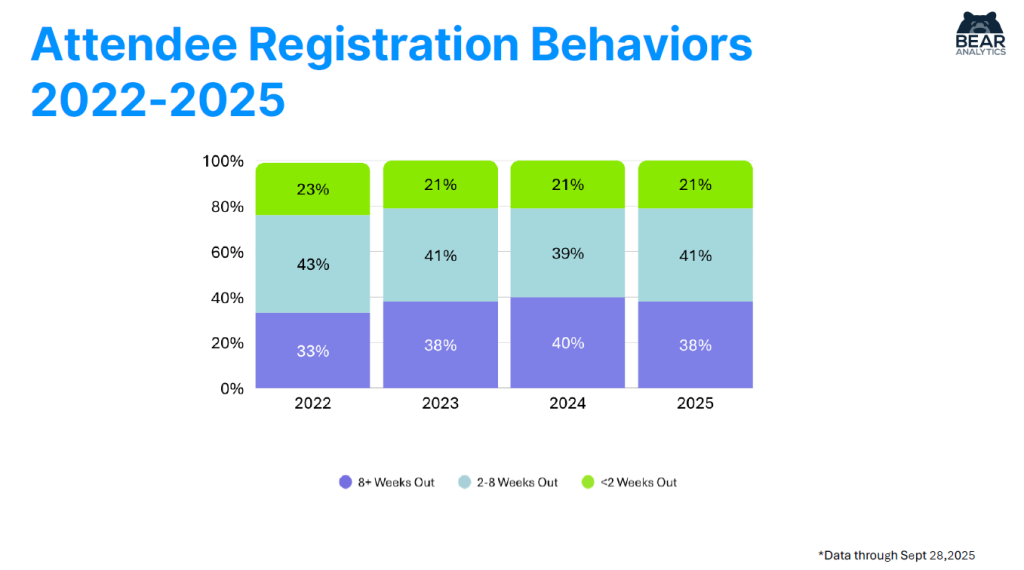
The Bear Analytics 2025 Benchmark Report – covering 3.3 million registrations across 222 post-pandemic B2B events – confirms the pattern has barely moved since 2022. The share of people signing up in the final two weeks has stayed consistent across all four years studied. What has changed is not when people register.
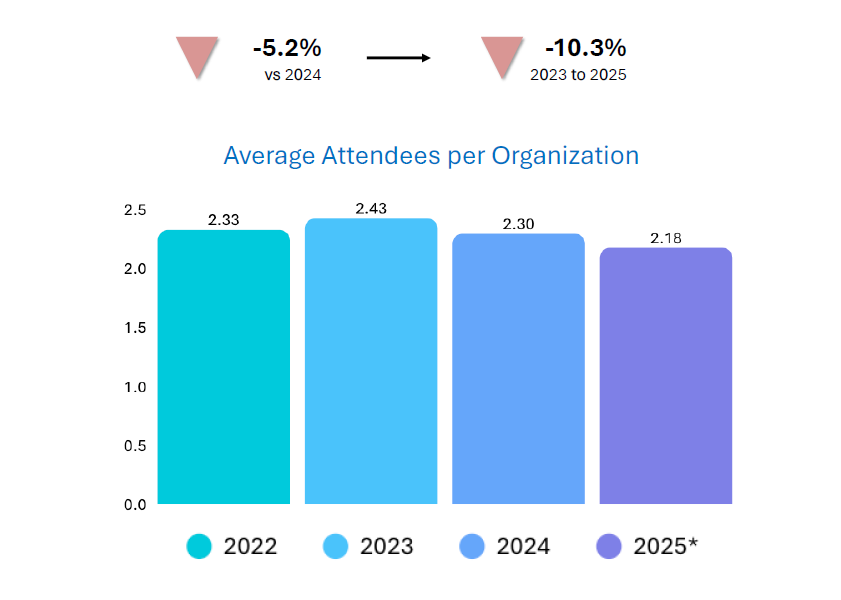
It’s who is showing up, and how many of them. Attendees per organization are down roughly 10% from their 2023 peak, meaning organizations that used to send five people are now sending three.
Attendees are weighing budgets, approvals, travel costs, and calendars. Meanwhile, organizers are stuck figuring out catering counts, sponsor promises, and hotel blocks. Understandably, it can be tricky to work out all of the details on their end so that they can attend. But for you (the sleep-deprived organizer/marketer who’s been living on coffee and wishful thinking) it can be equally tricky.
That’s because late registrations can royally mess with your budgeting, disrupt your planning, and impact the experience for everyone involved — including those last-minute attendees themselves (it’s a vicious cycle).
To better understand this phenomena, let’s dig into what causes this trend, how it bites your bottom line, and what you can actually do to fix it.
Here’s what we will cover:
- Why late registrations happen?
- How late sign-ups become a huge headache
- How can you get attendees to register earlier?
- The real fix: a well planned peer-to-peer marketing campaign
- What should you measure to know your fix is working?
Why do late registrations happen?
Are attendees just procrastinating?
Not quite. Blaming it on laziness is too easy (and inaccurate). Attendee behavior has shifted post-2020, especially in B2B events, causing a major shift in attendee acquisition strategies and event marketing tactics. Here’s what’s behind the curtain:
1. Decision overload and FOMO fatigue
There are more events than ever before, clustered in spring and fall. Attendees feel like every week brings a new “must-attend” email. Instead of picking early, they delay their sign-ups and wait to see which event their colleagues choose or which keynote lands the biggest punch.
2. Budget bottlenecks
Q4 and Q1 are budget limbo for many organizations. Even if someone wants to register early, their finance team might still be fiddling with spreadsheets. Add multi-level approvals, and early commitment starts to feel like wishful thinking.
The Bear Analytics 2025 Benchmark Report puts numbers to this (see image below)The average number of attendees per organization dropped 10.3% between 2023 and 2025, sitting at 2.18 per organization in 2025. Fortune 500 companies sent 33.9% fewer attendees in 2025 compared to 2024. More organizations are showing up to events overall, but the groups they send are getting smaller.
3. Calendar chaos
Personal and professional calendars are in flux. From last-minute client meetings to family trips, attendees hold off to avoid double-booking. Waiting feels safer than committing too soon.
4. Too little information, too late
Event organizers can delay releasing final agendas, speaker lineups, or session tracks. And let’s be honest: “More details coming soon” isn’t much of a motivator. Attendees hesitate when value isn’t clearly communicated upfront which can dramatically impact event registration rates.
5. Discount conditioning
Some attendees have been trained by years of flash sales and last-minute promo codes. They wait … not because they’re unsure, but because they’re expecting the price to drop.
Stat check: 27% of repeat attendees register early, compared to just 17% of new attendees. First-timers tend to wait for social proof, speaker reveals, or peer nudges. (Maritz, 2024)
| TL;DR: Why Do Late Registrations Happen? |
|---|
|
How late sign-ups become a huge headache
Can you trust your revenue forecast?
Let’s say your early bird deadline passes, and only 30% of your target shows up. Do you panic? Do you slash prices? Do you throw another $5,000 at ads?
Late event registrations make it harder to accurately forecast revenue and improve event planning outcomes like::
- Locking in venue contracts confidently
- Forecasting revenue for sponsors
- Planning inventory for merch or materials
Worse, when those last-minute signups finally do trickle in, they can demand the same special treatment – VIP upgrades, group discounts, or custom invoices — when you least have the bandwidth to handle them.
What happens behind the scenes?
When 4 out of 10 attendees register at the last minute, planners scramble. You face:
- Over-ordering (food, badges, bags) or running short
- Volunteer and staff confusion
- Overflow sessions with no room reshuffling options
All while trying to smile for speaker selfies and answer your inbox.
Do attendees even enjoy the experience?
Late registrants tend to get:
- Worse flight and hotel options
- Less time to explore agendas or pick sessions
- Minimal opportunity to network in advance
| TL;DR: How Late Sign-ups Become a Huge Headache |
|---|
|
How can you get attendees to register earlier?
Smart marketers are turning the tables on late event registrations with better incentives and stronger event marketing strategies, not by begging or blasting more ads, but by tweaking incentives, tapping into peer power, and making value visible sooner.
How do you create urgency without yelling “last chance”?
- Add limited-time bonuses (VIP mixer invites, workshop access) that expire with the early bird date.
- Run real-time registration counters to show momentum, especially when your goal is to get attendees to register early without sounding desperate..
- Use FOMO reversal: “Here’s what you’ll miss if you wait.”
These strategies work better than standard countdown timers. They shift the question from “Should I register now?” to “Can I afford not to?”
What about peer pressure (the good kind)?
According to the CEIR Attendee Acquisition report, 67% of attendees register based on peer recommendations – far more than any email or ad.
This is where peer-to-peer marketing kicks in as one of the most effective attendee acquisition strategies to reduce last-minute event registrations. With platforms like Snöball, organizers activate attendees as influencers:
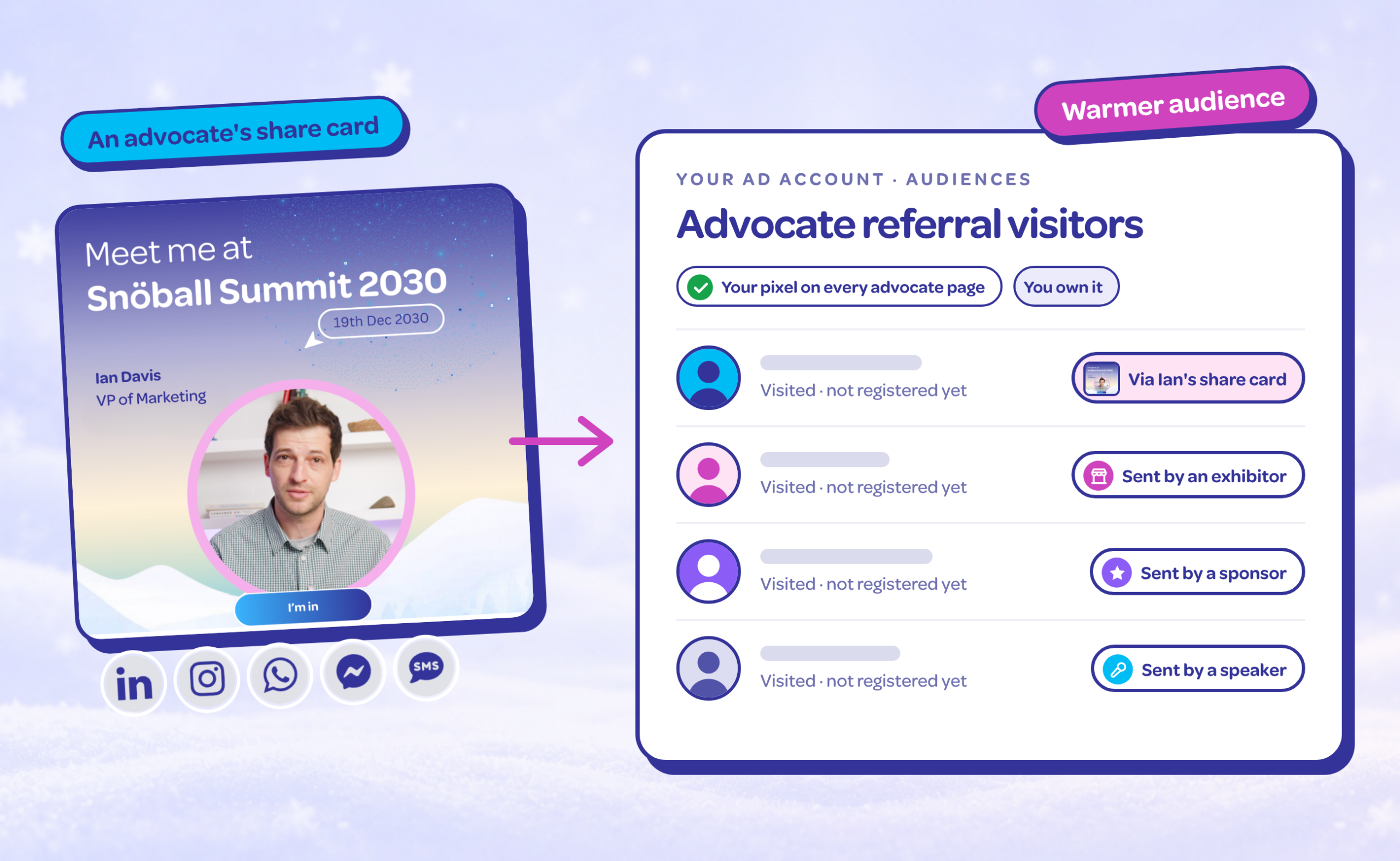
- Each registrant gets a personalized landing page and social sharing kit
- They can invite their network using prewritten content
- You can run gamified referral campaigns with tiered rewards for early sign-ups
Rather than marketing to attendees, you’re marketing with them.
When someone sees their colleague or speaker already attending, that’s a level trust and influence that simply can’t be matched.
Can pricing psychology actually shift the curve?
Yes — if you structure it properly:
- Use graduated pricing tiers, not just “early vs. regular”
- Visually display the pricing calendar so buyers see how rates change
- Offer group rates with flexible name swaps or invoices
People don’t just respond to discounts. They respond to clarity and perceived value and these simple changes can make a big impact when trying to reduce last-minute registrations and boost early sign-ups.
The bigger picture: late registrations aren’t always a timing problem
Before jumping straight to tactics, it’s worth stepping back. One of the more encouraging findings in recent event marketing comes from International Confex, one of the UK’s largest trade shows for the events industry. When Gina Kay, Marketing Manager at International Confex (Mash Media), analyzed registration data across three post-pandemic cycles, she found no meaningful correlation between when someone registered and whether they actually showed up.
“Whether or not they registered early or late, they kind of roughly all convert the same,” Gina said in a webinar hosted by ReelFlow. “It’s not the date in which they decide to register. It’s the things of speakers [sharing they’re attending], social proof of whether their peers are going to be there — that’s what converts people the most.”
And the result?
A 66% registration-to-visitor conversion rate that’s achieved not by pushing people to register earlier, but by building trust steadily across the year so that when they did register, they showed up. Late demand can be strong demand. What determines whether registrations convert into attendees is less about timing and more about the quality of engagement that got someone there in the first place.
That’s what makes a well-planned peer-to-peer campaign the real fix. Not a last-minute lever, but a year-round approach.
The real fix: a well planned peer-to-peer marketing campaign
There’s no one-size-fits-all fix, but a well-structured peer-to-peer strategy delivers results that are both scalable and sustainable. Here’s how to approach it:
- Leverage social proof early and often. Highlight confirmed attendees, share compelling statistics, and integrate “Who’s attending” widgets to build credibility and momentum from the outset.
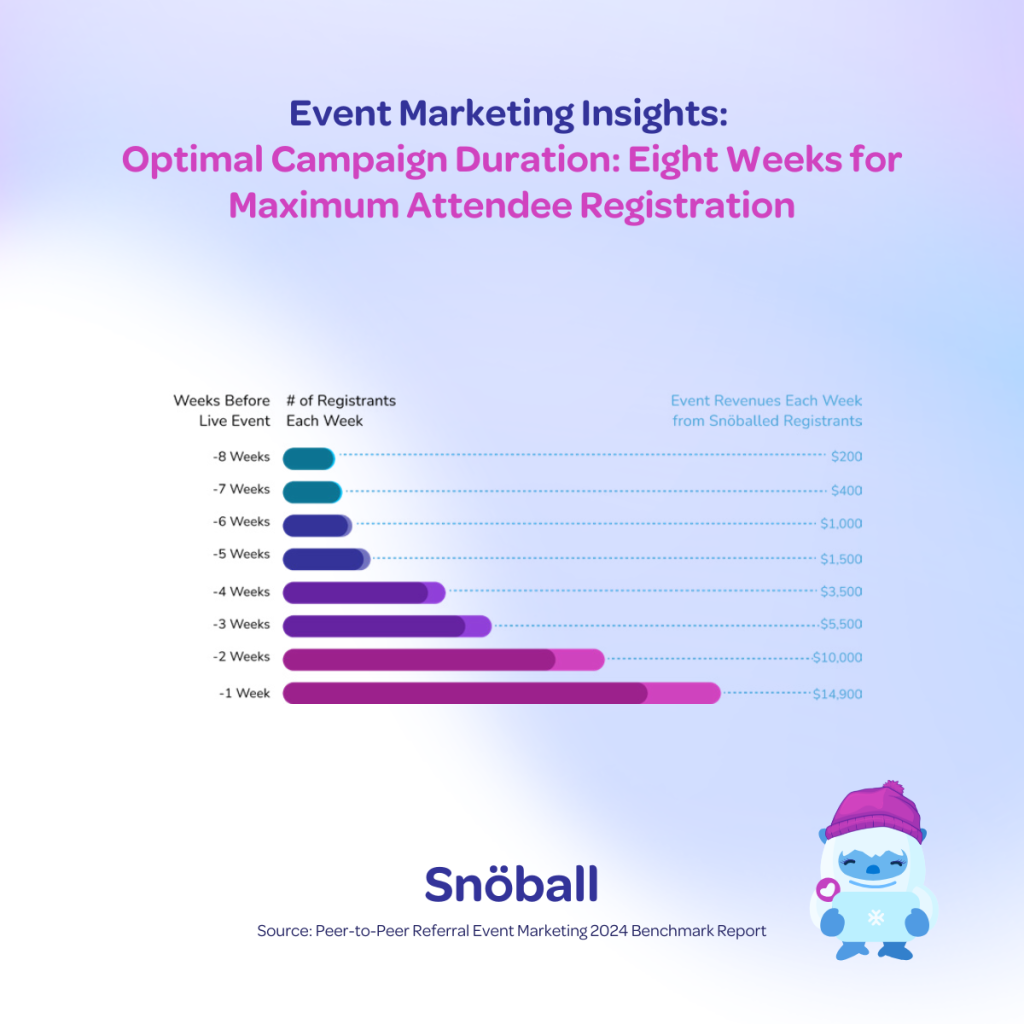
- Launch referral campaigns 4-6 weeks in advance. Snöball’s peer-to-peer marketing campaigns maintain steady engagement and drive consistent registrations throughout the promotional window.
- Communicate value clearly and immediately. Every touchpoint — from your landing page to email workflows — should answer a prospective attendee’s key question: Why register now?
- Offer meaningful incentives beyond discounts. Early access, exclusive content, priority seating, and recognition perks are often more persuasive than generic price cuts.
- Automate reminders based on user behavior. Use intent signals like pricing tier changes or page visits to trigger timely, relevant follow-ups via email and retargeting ads.
- Build trust year-round, not just at launch. Gina’s team at International Confex uses the quieter months in spring and summer to plan content, build email automations, and prepare exhibitor and speaker toolkits, so that when the campaign window opens, the audience already recognizes the brand and trusts the messaging. “Having the same tone of voice, the same branding, the same colors — that all links together subconsciously,” Gona said. “People know that Mash Media and International Confex will always have a certain look and feel.”
Want to reduce late sign-ups? Learn how peer-to-peer campaigns drive earlier registrations with Snöball.
What should you measure to know your fix is working?
If you’re serious about improving event registration rates, track these 4 signals to know if your strategy is working.
- Registration velocity
Are you moving the curve forward? Bear Analytics data shows that across four years of B2B events, roughly 38-40% of attendees register more than eight weeks out, 39-43% in the two-to-eight-week window, and around 21% in the final two weeks. A 10-15% shift toward earlier sign-ups in your own data means you’re on the right track.
- Peer referral impact How many attendees came in through invite links? That’s your peer power in action — and it should grow with every campaign.
- NPS by registration date Are early birds having a better experience than last-minuters? Track satisfaction by sign-up window to spot gaps you can fix.
- Revenue timing Are more dollars coming in earlier? Faster cash flow means your early-stage efforts are paying off. Bear Analytics found that paid attendees made up 43% of total registrations in 2025 — up from 34% in 2024 — with an average registration fee of $543. More organizations are willing to pay. Getting them to commit earlier is where the cash flow opportunity lives.
Remember: you don’t need to fret over trying to register everyone six months in advance. Just nudge your audience into that 31–60 day sweet spot, where budgets, logistics, and value align.
Bottomline
Attendees are busy. Overwhelmed. Cautious. And constantly evaluating ROI.
If your event doesn’t feel urgent, they won’t act urgently.
But with smart psychology, peer influence, and the right tech stack, you can shift behavior without shouting. And as International Confex’s 66% registration-to-visitor conversion rate shows, the goal isn’t to just move registrations earlier, but to build the trust that turns into attendance.
Which ends in better cash flow, happier exhibitors and sponsors, and less midnight dashboard refreshing.
Shifting this mindset is key to reducing late event registrations and improving overall attendee acquisition.