
An event is coming up, and you want people to talk about it.
A speaker has just been confirmed. An exhibitor has booked a booth. An attendee has registered. There’s something worth telling their professional network.
So you send them a social post, a graphic, or a video they can share.
And then comes the real question:
Will they actually want to share it?
The event team may have provided everything they need: a graphic, suggested copy, a logo, the event details, and a registration link. But the post can still feel more like an advertisement for the event than something the person would genuinely want to put on their own social feed.
That hesitation matters.
Event organizers increasingly rely on speakers, attendees, exhibitors, and sponsors to help spread the word about their events. They can reach people and communities that the event’s own channels may not reach. And recommendations from people we know can carry significant weight. McKinsey’s 2026 State of the Consumer research found that friends and family rank among the most trusted sources people turn to when researching products, ahead of social media and generative AI.
But getting someone to share your event is about more than giving them something to post.
The content needs to give them a reason to share it, give their audience a reason to care, and make the whole process easy.
That could mean a speaker sharing their upcoming session, an exhibitor inviting people to visit their booth, or an attendee telling their network why they’re looking forward to being there.
And when hundreds or thousands of people are involved, creating the right content for everyone becomes a much bigger challenge.
So, what makes event content something people actually want to share?
This article breaks it down – from creating messages people can relate to and content that catches attention, to personalizing it at scale, making sharing easy, and measuring what those shares ultimately achieve.
What we will cover
- Give People a Reason to Share
- Create Content That Gets Attention
- Personalize Content for Different People
- Make Sharing Easy
- Measure What Your Shares Achieve
- What Makes Event Content Worth Sharing?
1. Give People a Reason to Share
Start with the person who will be sharing the post – not the event.
Ask a simple question: Why would this person want to put this on their own social feed?
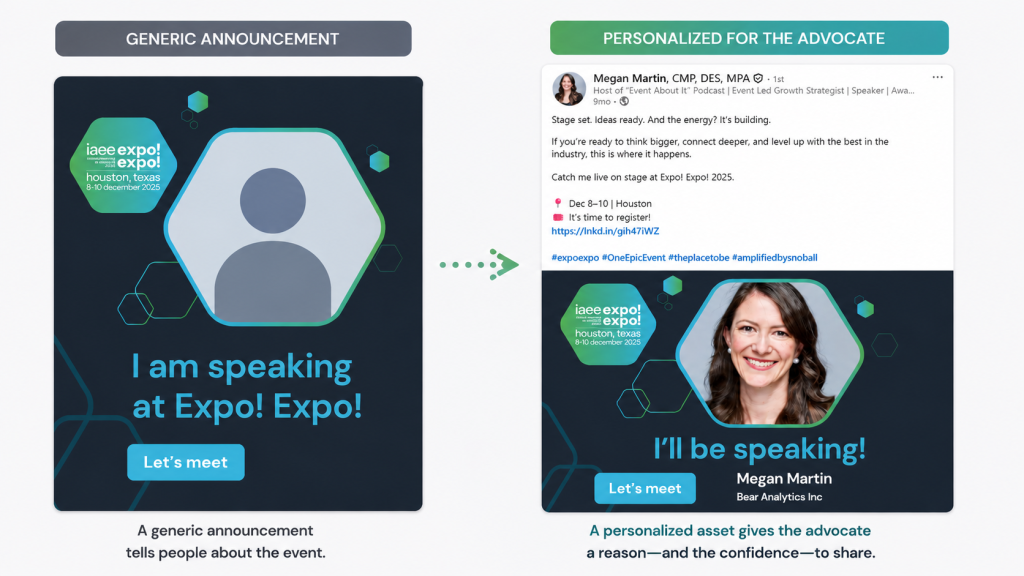
A generic event announcement might tell people that the event is happening. But a personalized post gives someone a reason to talk about it in their own words.
Look at the difference in the example below. On the left, the message simply announces that someone is speaking at the event. On the right, the post gives the speaker a personal message, their photo, their session, and a reason to invite their network.
That distinction matters.
People are more likely to share something when it feels connected to why they are attending, speaking, exhibiting, or participating. Their post should give them something they are comfortable putting their name behind – and give the people seeing it a reason to care.
A useful test is to imagine seeing the post without knowing anything about the event.
What would make you stop and pay attention?
It could be:
- An idea you want to learn more about
- A session you might want to attend
- Someone you would like to meet
- A reason to connect with the person posting
- An opportunity you don’t want to miss
The event team provides the information. The person sharing it should have a reason to make it their own.
Once you’ve given people that reason, the next challenge is getting their audience to stop scrolling and pay attention.
2. Create Content that Gets Attention
People scroll quickly. Your event post has only a moment to catch their attention.
The first thing they see should make it clear what this is, who it’s about, and why they should care.
Give each post one clear purpose. It could introduce a speaker, highlight a session, encourage people to visit a booth, or show that someone will be attending the event. When the purpose is obvious, people can understand the message without having to stop and figure it out.
The format matters too.
A static graphic can work well when the message needs to be understood quickly. But some stories are better told through movement. A short event video can create excitement. A speaker clip can put a face and voice behind the message. An animated graphic can make a simple announcement more engaging.
For example, the LinkedIn post below uses video to introduce the UFI European Conference and create a sense of the event.
Snöball’s Snö-Motion helps event teams turn existing event videos, sizzle reels, and animated graphics into videos that people can share directly. The same content can be prepared for different screen sizes, including square, portrait, and landscape formats.
The principle is simple: choose the format that tells the story best.
Design for wherever people see it
A post created for LinkedIn may eventually be shared somewhere else. Someone might put it on Instagram, include it in an email, forward it on WhatsApp, or share it in a private community.
The content should still make sense wherever it appears.
Before publishing, look at the post the way your audience will actually see it (especially on a phone) and ask:
- Who is this about?
- What’s happening?
- Why should I care?
If those answers aren’t immediately clear, the post needs another pass.
And when hundreds or thousands of people are sharing content, creating something that works for each person becomes a much bigger challenge. That’s where personalization and scale come in.
3. Personalize Content for Different People
People don’t all have the same reason for talking about an event.
A speaker may want to promote their session. An exhibitor may want to bring people to their booth. A first-time attendee may want to share that they’re excited to be there. Someone returning for the third time may want to tell their network why they keep coming back.
So the content shouldn’t be exactly the same for everyone.
Personalization can go beyond adding someone’s name and photo. The message can reflect their role, company, session, booth, interests, or reason for attending.
It can also change as the event gets closer.
Someone registering for an event might receive one message. A confirmed speaker might receive another. When the agenda is announced, there’s a new reason to post. Closer to the event, a reminder can give people another reason to invite their network.
The goal is simple: make the content feel like it belongs to the person sharing it.
Doing this for a handful of people is relatively easy. Doing it for hundreds of speakers, thousands of attendees, and an entire exhibitor floor is much harder.
That’s where technology can help. Instead of creating every version manually, event teams can use the information they already have about their participants to create relevant content at scale.
Snöball’s Snöflex is built around this idea. It lets event teams tailor the content people see based on who they are, who they want to reach, and where they are in their event journey.
Here are a few ways that can work:
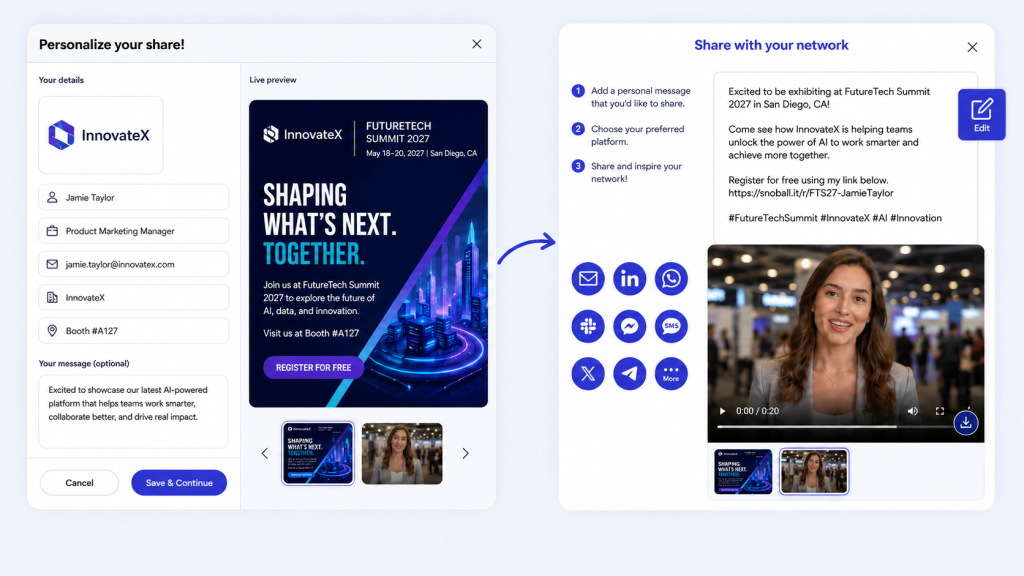
Let people choose the format that works for them
Some people may prefer a static image. Others may get more engagement from video.
Giving people a choice means they can pick the format that feels right for their network, while the core event message stays consistent.
Let people share in the language their network uses
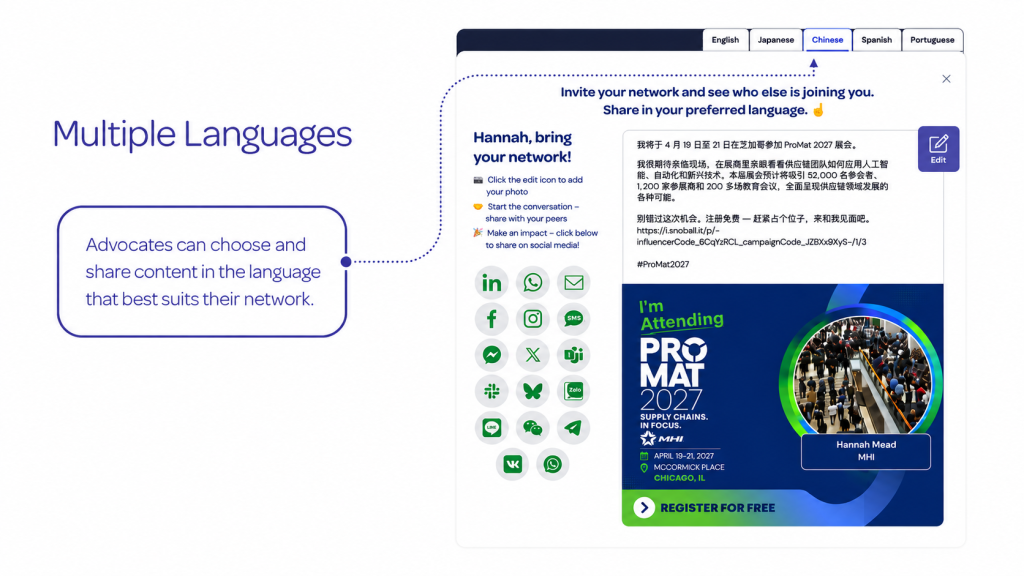
If someone’s professional network is more comfortable in Arabic, Japanese, Chinese, or another language, they shouldn’t have to share an event message in English simply because that is the organizer’s default.
The message and sharing experience can adapt to the language that makes the most sense for that person and their audience.
Give first-time and returning attendees different things to say
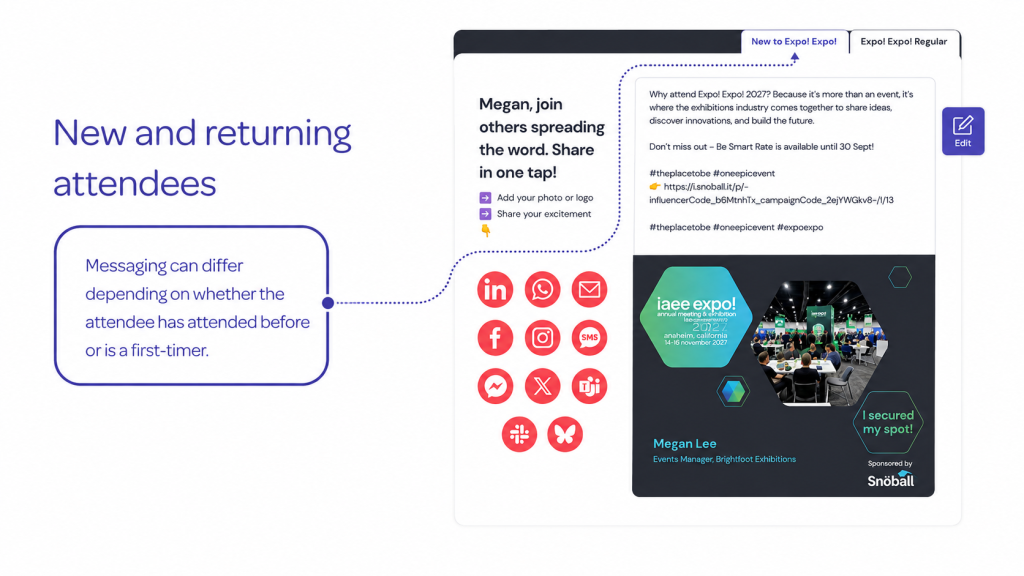
Someone attending for the first time has a different story from someone who’s been before.
A first-time attendee might want to share their excitement about joining. A returning attendee might want to tell people why they’re coming back.
The content can reflect that difference instead of giving everyone the same message.
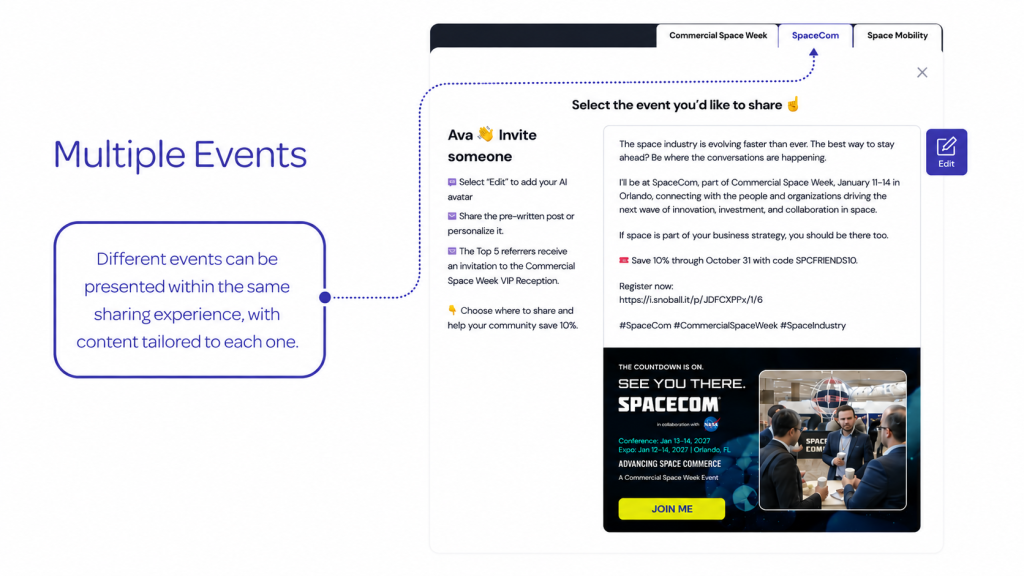
Let people choose which event they want to share
People can be involved in more than one event. An organizer may also run several events for different audiences.
Instead of creating a separate sharing experience for every event, people can choose the event they want to talk about and receive the appropriate message and content for it.
That’s what personalization should accomplish: the event message stays consistent, while the way people talk about it feels personal to them.
And when sharing is this easy to tailor, the next question is just as important: how easy is it for someone to actually share?
For more ideas on how personalization can extend across a referral campaign, see 67 Ways to Personalize Your Referral Campaigns
4. Make Sharing Easy
Even when people want to share your event, they may not do it if sharing takes too much effort.
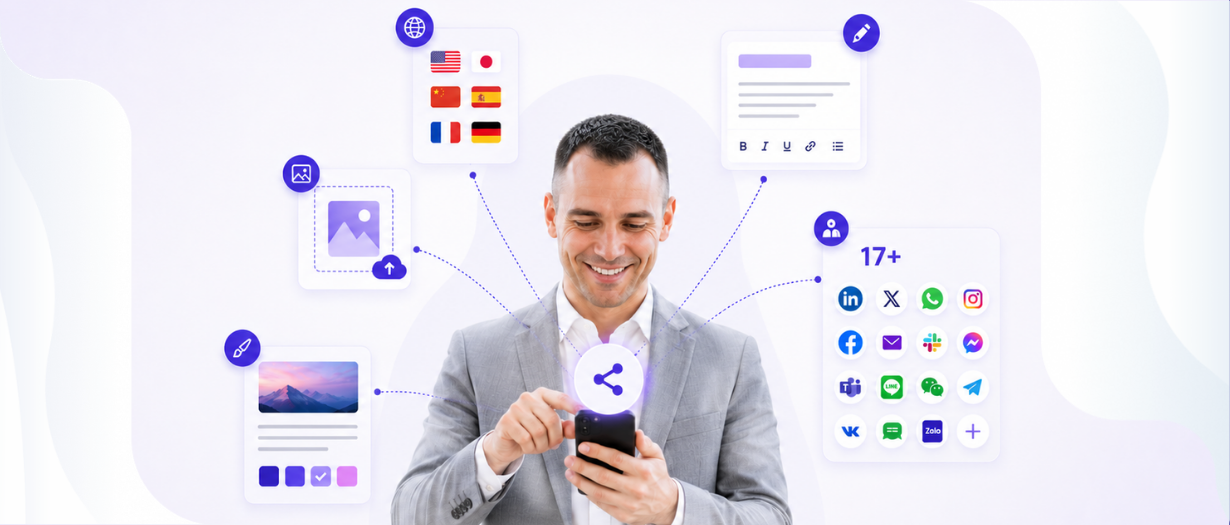
Give them everything they need in one place: the image or video, suggested text, the event link, and a simple way to choose where they want to share it.
The ideal experience is simple:
Review the post. Choose where to share it. Share.
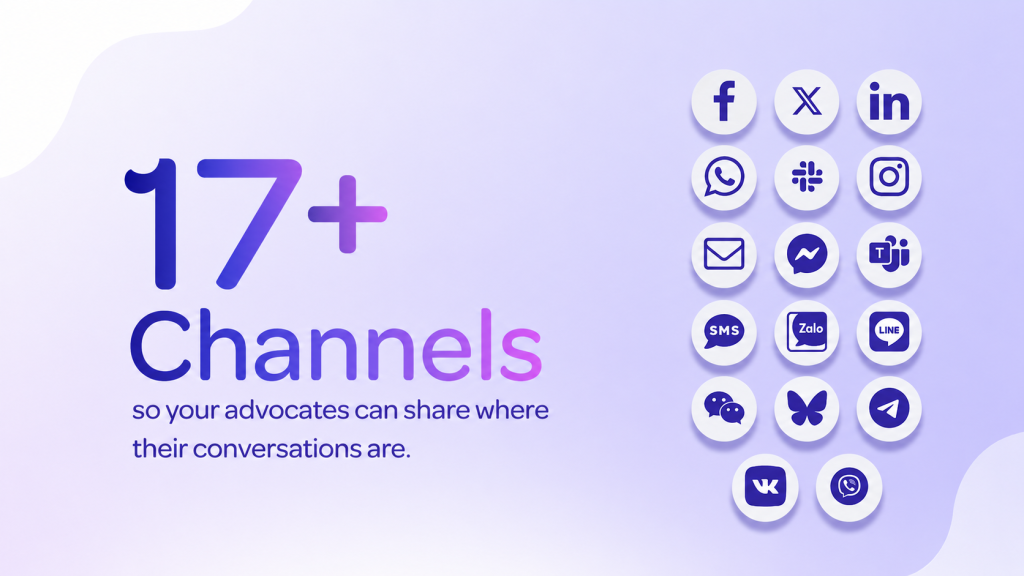
The choice of where to share matters, too. People use different platforms to communicate with different audiences. Someone may reach their professional network on LinkedIn, while another person may be more active on WhatsApp, Slack, email, or another platform.
That’s why Snöball supports 17+ sharing channels, giving people more flexibility to share where their conversations already happen. Snöball’s research found that attendees who could share on their preferred channel were 3.2 times more likely to share at all.
A good sharing experience should give people:
- Ready-to-use text
- The correct event link
- Content that works on their chosen platform
- A choice of where to share
- The ability to edit the message
The idea is simple: make sharing feel like a few clicks, not another task on someone’s to-do list.
Give people a useful starting point, but let them change the message so it still sounds like them.
And once people start sharing, there’s one more question worth answering: What did those shares actually accomplish?
5. Measure What Your Shares Achieve
Getting people to share your event is only the beginning. You also need to know what happens after they share it.
Cvent’s 2026 research found that 96% of event marketers are confident their marketing is building audience trust, but only 28% have a robust framework for measuring its impact.
That makes measurement especially important. A campaign can generate hundreds of shares and still leave you with no clear idea of what those shares actually accomplished.
A useful dashboard can help answer questions such as:
- Which people generated the most engagement?
- Which posts got the most clicks?
- Which channels brought in the most registrations?
- Which messages performed best?
- How many people went from seeing or sharing a post to actually registering?
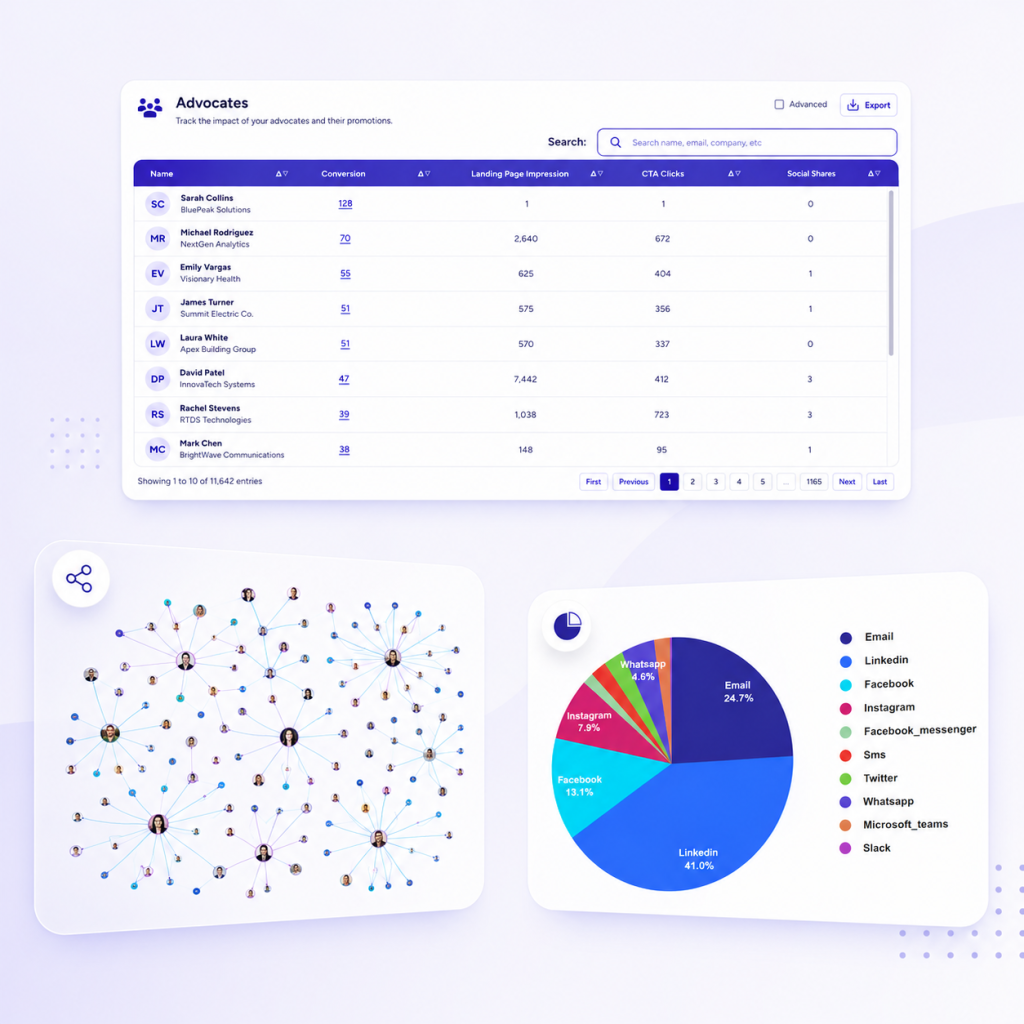
These answers can improve the next campaign, too. They show you which groups to involve, what kind of content to create, which channels are worth prioritizing, and which messages are getting people to take action.
Snöball’s campaign dashboard tracks activity from sharing through clicks, referrals, and registrations, giving event teams a clearer picture of what their social campaigns are actually achieving.
The goal isn’t simply to count how many people shared your event. But to gain a better understanding whether those shares helped more people discover, engage with, and register for it.
That brings us to the bigger question: what makes someone want to share event content in the first place?
6. What Makes Event Content Worth Sharing?
We’ve covered the pieces that make event content more likely to get shared:
- Give people a reason to share it.
- Create content that gets their attention.
- Make it relevant to them.
- Make sharing easy.
- Measure what happens afterward.
Put those pieces together and a simple principle emerges:
People are more likely to share event content when it feels relevant to them, useful to their audience, and easy to pass along.
Before you send someone a post, graphic, or video to share, ask three questions:
Would I want to share this?
Does it reflect my involvement with the event? Does it give me something I would genuinely want to tell my network?
Would my network care?
If someone saw this post without knowing anything about the event, would they have a reason to stop, read, watch, or click?
Can I share it easily?
Is the content ready to use? Is the link correct? Can I choose where to share it? Can I change the message so it sounds like me?
If the answer to all three is yes, you’ve created something people have a reason to pass along.
And that’s the real opportunity with event social campaigns: your event doesn’t have to rely only on its own channels. Give the people already connected to your event a reason to talk about it, and make it easy for them to bring it to their own networks.