
Promo codes are a familiar part of event registration. They give people a reason to register – a discount, a special rate, or early/exclusive access to an event benefit.
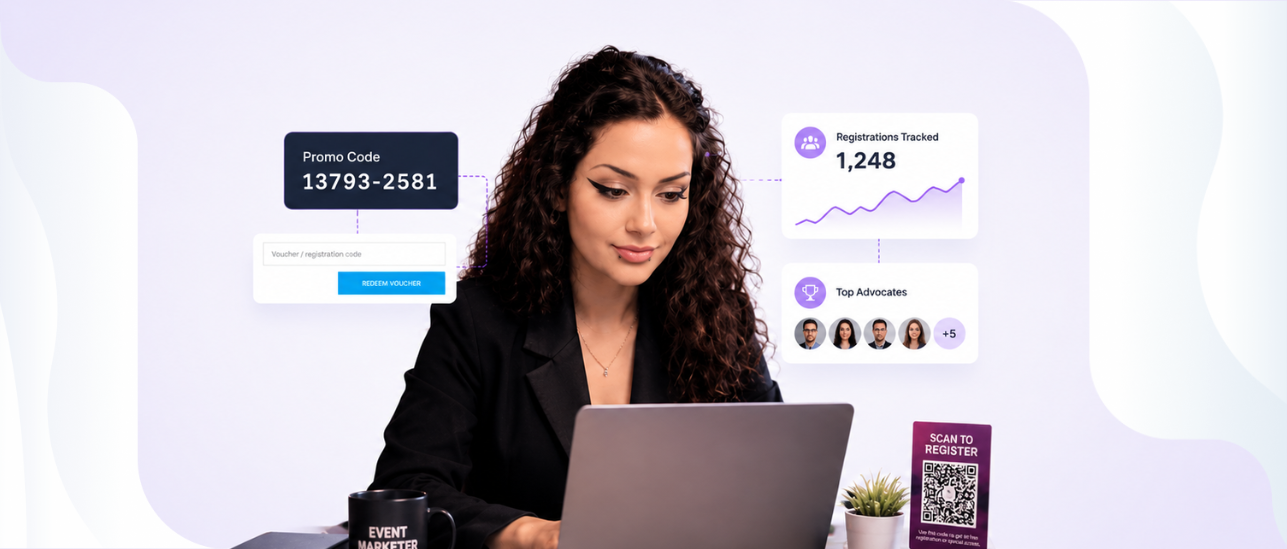
When speakers, exhibitors, sponsors, attendees or other advocates receive their own event promo codes, they have something specific to share with their audiences. When someone uses that code to register, the organizer can connect that registration back to the advocate who shared it.
That creates value for everyone involved. The person registering gets a benefit, the advocate gets a useful offer to share and may also receive an incentive or recognition for the registrations they generate, and the organizer gets a clearer view of which advocates are bringing people to the event.
This is where attribution becomes important. In simple terms, attribution helps organizers understand where registrations came from and which promotional efforts contributed to them.
When promo codes are linked to individual advocates, they can give event marketers a more granular view of their peer-to-peer event marketing campaigns – from which advocates are generating registrations to how different campaigns are performing. Those insights can help teams assess what is working, make better decisions during a campaign, and plan future events with a clearer understanding of what drove results.
This article looks at how promo codes can strengthen peer-to-peer promotion, support sponsor activation, and provide useful attribution data for event marketers.
Here’s a quick look:
- Why Attribution Matters
- Every Registration Has a Journey
- Where Promo Codes Create Value
- The Win-Win-Win Behind a Promo Code
- How to Build a Promo-Code Campaign
- Promo Codes Are One Part of Attribution
- Conclusion
Why Attribution Matters
Events are a significant part of the marketing mix, and event teams are under growing pressure to show what they deliver. Bizzabo’s 2026 State of Events Benchmark Report found that 40% of respondents still struggle to prove event ROI.
Vendelux’s 2026 B2B Events Report highlights the attribution challenge even more clearly. Based on a survey of more than 120 B2B marketing and events leaders, 86% said they cannot accurately attribute ROI back to events, while 90% said events influence deals that go uncredited in their CRM.
Attribution, simply put, helps marketers connect a result to the activity that contributed to it. For an event, that can mean understanding which campaigns, channels, partners or advocates are associated with registrations and other outcomes.
Better attribution can help event teams:
- See which advocates are generating registrations and compare performance across speakers, exhibitors, sponsors, attendees and other partners.
- Measure the effectiveness of peer-to-peer event marketing campaigns by looking at registrations generated by individual advocates and campaigns.
- Understand which channels and approaches are working so teams can put more effort into the activities producing results.
- Give sponsors and partners clearer performance data by showing the registrations associated with their promotional efforts.
- Make better decisions during and after a campaign by using past campaign and registration data to guide decisions about audiences, advocates, offers and promotional activity.
This is where promo codes become particularly useful.
A unique code gives an advocate something specific to share with their audience. When someone uses that code to register, the organizer can connect the registration to the advocate who shared it. The person registering receives a benefit, while the advocate may receive an incentive or recognition based on the registrations they generate.
The code therefore creates a useful connection between the offer, the advocate and the registration. Instead of looking only at how many people registered, organizers can start asking more specific questions: Which advocates generated the most registrations? Which campaigns performed best? Which offers produced the strongest response?
Those questions lead to the next part of the story: understanding the journey that takes someone from first hearing about an event to finally registering.
Every Registration Has a Journey
A registration rarely starts and ends with a single interaction.
Someone might first see a speaker’s post on LinkedIn, come across the event again on Instagram, receive an email from an exhibitor, see a post on Facebook, hear about it in a WhatsApp or Slack group, and eventually receive a recommendation from a colleague.
For organizers, the challenge is working out which of these efforts are bringing people to the event.
A unique promo code can help organizers see which registrations are associated with a particular advocate. A speaker’s code, for example, can show how many registrations came through their outreach.
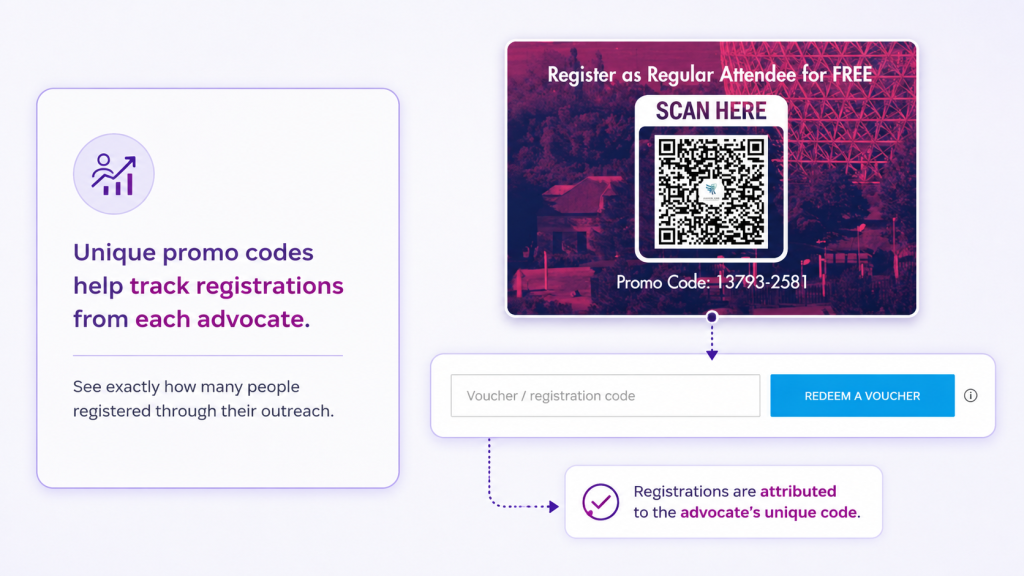
That gives organizers more than a registration total. They can compare speakers, exhibitors, sponsors, attendees and other partners, and see which relationships are contributing most to attendance.
The more people involved in promoting an event, the more valuable this information becomes.
Where Promo Codes Create Value
Give advocates something useful to share
An advocate already has a reason to talk about an event. They may be speaking, exhibiting, sponsoring, attending or working with the event in another capacity.
A promo code gives them something concrete to include in that recommendation. Instead of sharing an event link on its own, they can offer their audience a registration benefit that gives people another reason to act.
The code can be tailored to the person sharing it, making the offer feel more personal and giving the organizer a way to identify the registrations that come through that advocate.
This can work across a range of event communities, including:
- Speakers
- Exhibitors
- Sponsors
- Attendees
- Association partners
- Community partners
- Industry advocates
The offer and message can then be adapted to fit the relationship. A speaker might share a code with their professional network, while an exhibitor might use one to reach existing customers or prospects.
See which advocates are bringing people to your event
Giving each advocate a different code changes what organizers can see in their registration data.
A speaker might promote the event on LinkedIn and through email. An exhibitor might reach customers through a newsletter, Instagram or Facebook. An attendee might share the code through WhatsApp, Slack or a direct message.
When those people use different codes, organizers can see which registrations are associated with each advocate.
That makes it possible to compare results across speakers, exhibitors, sponsors, attendees and partners – and see where the strongest response is coming from.
The same approach can also help organizers recognize the people who are contributing most to an event’s attendance. Those advocates may be worth engaging earlier, giving more support to, or involving more closely in future campaigns.
Give sponsors a role in the offer
Promo codes can also give sponsors a way to take part in the registration offer itself.
A sponsor can fund the discount that encourages people to register, while its brand appears alongside the offer being shared by advocates.
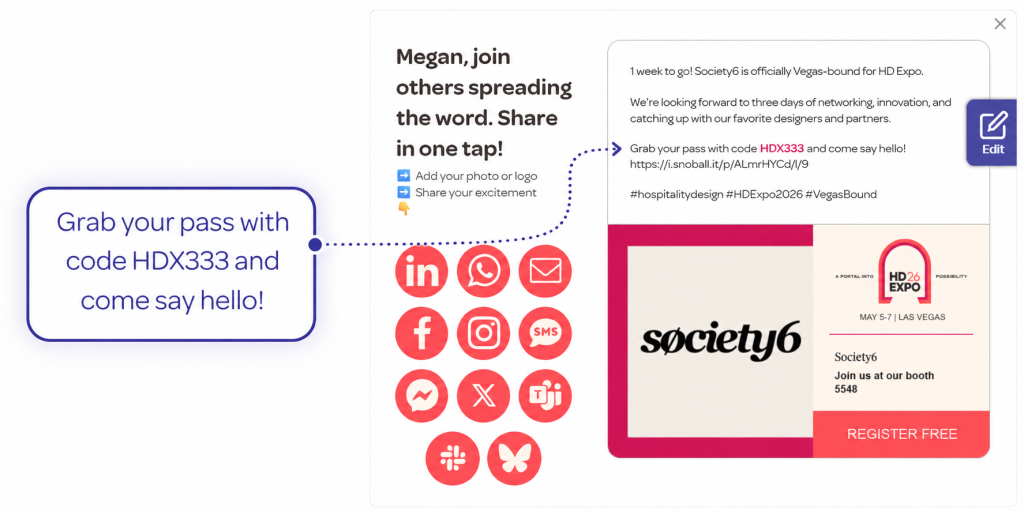
Snöball’s Snöbank is one example. A sponsor funds the discount behind a peer-to-peer campaign, while its branding appears on the promo code, share cards and campaign emails. The promo code also carries the sponsor’s name, giving organizers a way to track registrations associated with the sponsored offer.
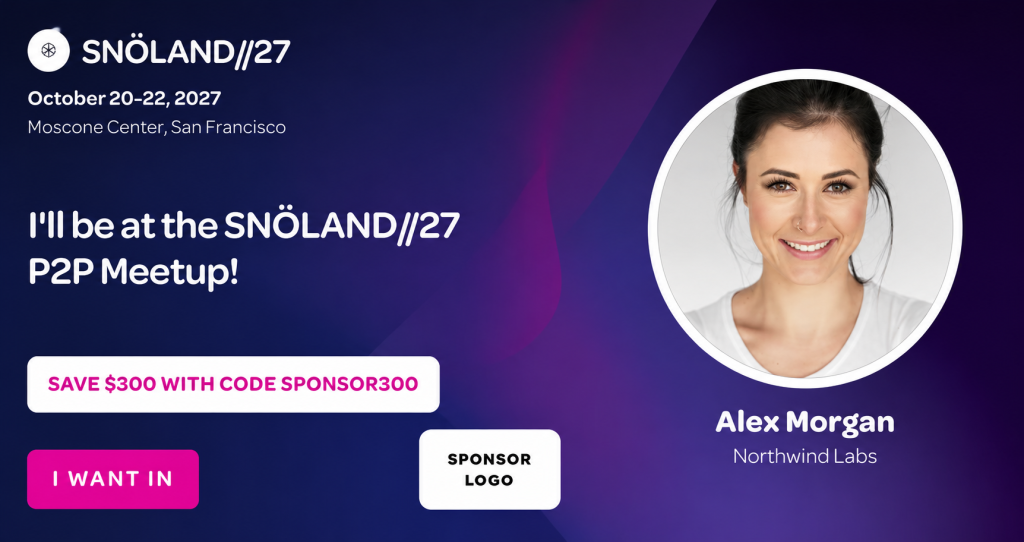
For the sponsor, this creates visibility around an offer that people are actively sharing. For the organizer, it adds a registration metric that can be included in sponsor reporting and renewal discussions.
Use the data to improve future campaigns
The value of individual promo codes goes beyond counting redemptions.
Once the campaign is over, organizers can look at the results across:
- Speakers
- Exhibitors
- Sponsors
- Attendees
- Partners
- Audience groups
- Campaign periods
They can see which advocates generated the most registrations, which offers received the strongest response, and which groups were most active in promoting the event.
That information can shape the next campaign. Organizers can identify their strongest advocates, decide where to focus outreach, refine the offers they provide, and build future peer-to-peer event marketing campaigns around what the data shows.
A promo code therefore does more than help someone register. It can help an event team understand what happened during the campaign – and use that information when planning what comes next.
The Win-Win-Win Behind a Promo Code
A good promo-code campaign gives everyone involved a reason to participate.
For the person registering, the benefit is straightforward: they get a discount, a special rate or another registration incentive.
For the advocate, the code gives them something valuable to share with their audience. In some campaigns, they may also receive recognition, a reward or another incentive based on the registrations they generate. That can give them an added reason to keep promoting the event and encourage more people to register.
For the organizer, every registration made with an advocate’s code adds to the picture of how the event is being promoted. The team can see which advocates are generating registrations, recognize their contribution and use those results to shape future campaigns.
The three sides can reinforce each other. A worthwhile offer gives advocates a stronger reason to share. More people sharing the offer can bring more people to the event. And the resulting data gives organizers a clearer understanding of what is working and where to focus their efforts next.
Getting that balance right starts with the campaign itself – who receives a code, what the code offers, how the advocate is encouraged to share it, and what the organizer wants to measure. These decisions can determine how useful the campaign is for everyone involved.
How to Build a Promo-Code Campaign
A strong promo-code campaign starts with a clear idea of who you want to reach, what you want to offer them, and what you want to learn from the results.
Decide who should receive a code
Start with the people who have a genuine connection to your event and can help bring others into the conversation.
These might include:
- Speakers
- Exhibitors
- Sponsors
- Attendees
- Association partners
- Community groups
- Other event advocates
The right groups will vary from event to event. A speaker may be well placed to reach a professional audience, while an exhibitor may have stronger relationships with customers and prospects.
Giving each group its own code also makes it easier to understand which relationships are contributing registrations.
Decide what each code offers
The offer should be easy to understand and relevant to the people receiving it.
That could be a percentage discount, a fixed amount off registration, a special registration rate or another event benefit.
Consider the audience as well as the advocate sharing the code. An offer that works for a speaker’s professional network may not be the right fit for an exhibitor’s customers or an attendee’s colleagues.
The simpler the offer is to explain, the easier it is for an advocate to share.
Make it easy for advocates to share
Giving an advocate a promo code is only the starting point. Make it easy for them to use and share it by providing:
- The offer: Clearly explain what the code gives their audience and who can use it.
- The key details: Include the registration link, offer deadline and any important terms they need to know.
- Ready-to-use content: Give advocates a social post, email copy or other messaging they can share or adapt.
- A personalized destination: Where possible, give each advocate a personalized landing page or referral link that takes their audience directly to the event.
- A way to see their results: Let advocates know that their registrations can be tracked, and where appropriate, share their results after the campaign.
The goal is simple: give advocates the offer, the message and the tools they need to share it confidently.
Make each code easy to recognize
A code can include the advocate’s name, company or campaign so that it is easy to identify.
For example:
JANE25
PARTNER25
FUTURE2026
A recognizable code is easier for an advocate to share and easier for an organizer to identify when reviewing registration data.
Decide what you want to measure
Think about what you want each code to tell you before the campaign begins.
You might track:
- Code redemptions
- Registrations generated
- Registration conversion rate
- Revenue generated
- Results by advocate
- Results by audience group
- Results across campaign periods
The real value comes from comparing those results. Which advocates generated the most registrations? Which groups responded most strongly? Which campaigns produced the best results?
These comparisons can help organizers understand what worked and make more informed decisions about future campaigns.
Share the results
The people promoting an event should have a clear view of the contribution they made.
Sharing results with speakers, exhibitors, sponsors and other advocates can help recognize their efforts and give them useful feedback for future campaigns.
For organizers, it also helps identify your most effective advocates for future campaigns.
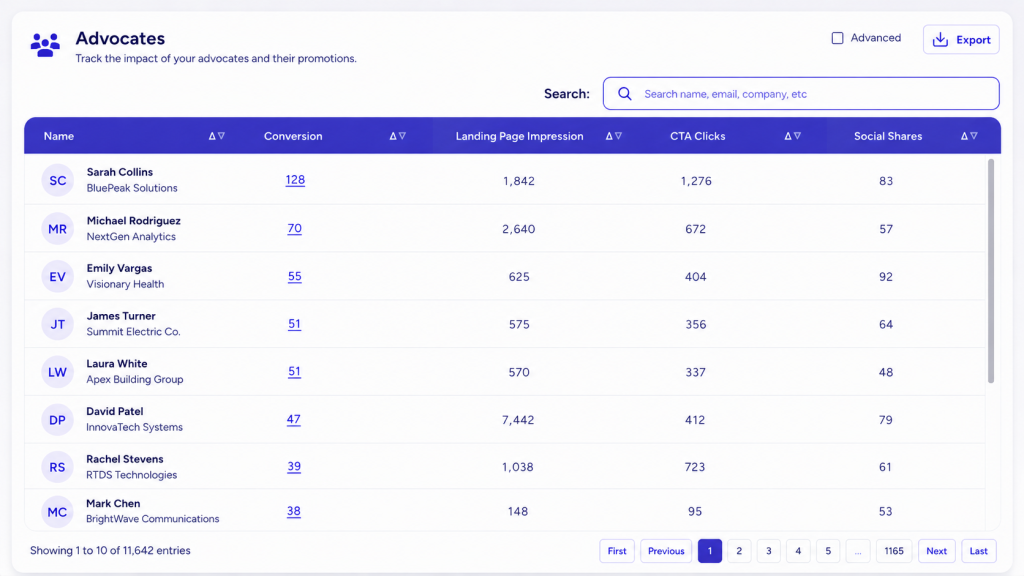
For sponsors, registration results associated with their promo codes can also become part of post-event reporting, giving organizers a concrete measure to include alongside other sponsorship outcomes.
The same results can then feed into the next campaign – helping organizers decide who to involve, which offers to use and where to focus their promotional efforts.
A well-planned promo-code campaign can tell you a lot about the registrations that come through it. But a registration can have several influences before someone reaches the checkout page, and not every one of those influences will result in a code redemption. That is where the wider picture of attribution comes in.
Promo Codes Are One Part of Attribution
Promo codes provide one view of attribution.
A registration can have several influences before someone reaches the checkout page. Someone might see a speaker’s post, click through to the event website and register later without entering the code.
Another person might hear about the event from a colleague and go directly to the registration page. These actions become part of the registration journey, even when there is no promo-code redemption to record them.
That is why promo codes work best alongside other ways of tracking event marketing activity.
Personalized referral links and landing pages can show what happens before registration, while email analytics, social engagement, campaign tracking and registration data can add further context.
Snöball’s peer-to-peer campaigns use personalized landing pages and share links alongside campaign tracking, giving organizers more ways to follow activity associated with individual advocates.
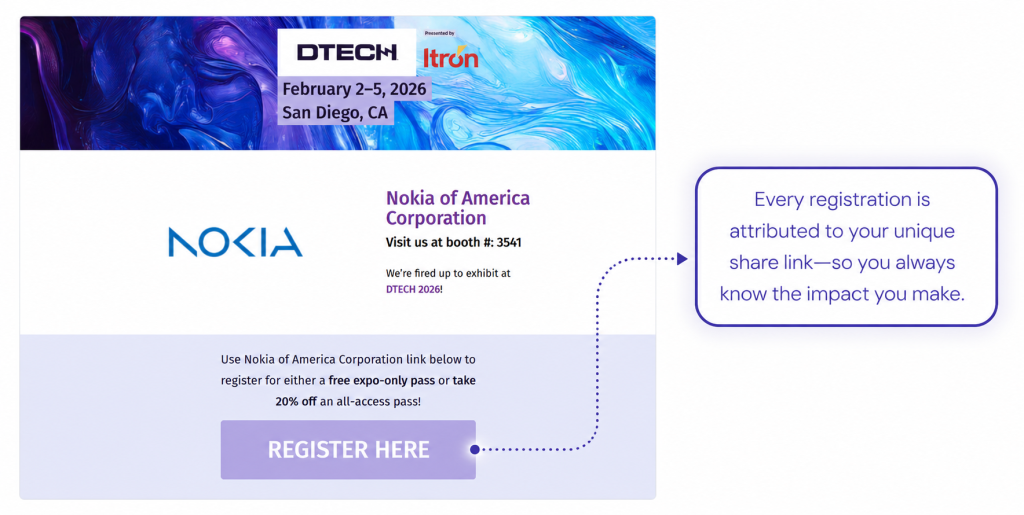
Together, these different sources can help organizers build a fuller picture of how people discover, consider and register for an event. Promo codes remain an important part of that picture because they connect completed registrations with the advocates whose codes were used.
Conclusion
Promo codes have a straightforward purpose: give people a reason to register.
When each code is linked to a speaker, exhibitor, sponsor, attendee or other advocate, it can do more. It can show organizers which advocates are generating registrations, provide data for assessing peer-to-peer event marketing campaigns, and give teams information they can use when planning their next event.
The key is to think about the code before it reaches the registration page. Who should receive it? What should it offer? What do you want to learn from the results? And how will those results shape your next campaign?
A promo code may look like a small part of the registration process. Used deliberately, it can become a useful thread running from the person sharing an event to the person registering – and from that registration back to the data that helps shape the next campaign.
So the next time you create a promo-code campaign, don’t just ask what the code should offer. Ask what it should help you learn.
About Snöball
Snöball is a peer-to-peer referral marketing solution that turns an event’s audience into its #1 growth channel. By mobilizing attendees, speakers, exhibitors, and members to share personalized campaigns across their social and professional networks, Snöball helps event organizers and associations drive measurable, advocacy-led registration growth. Snöball is trusted by leading organizers and associations, including RX, Informa, Clarion Events, and IAEE. Learn more at snoball.events.